
- Land Clearing
The Best Time of Year to Clear Land in Oklahoma
Late fall through winter is when Oklahoma ground clears best. Here is what actually changes, and when waiting for the season is not worth it.

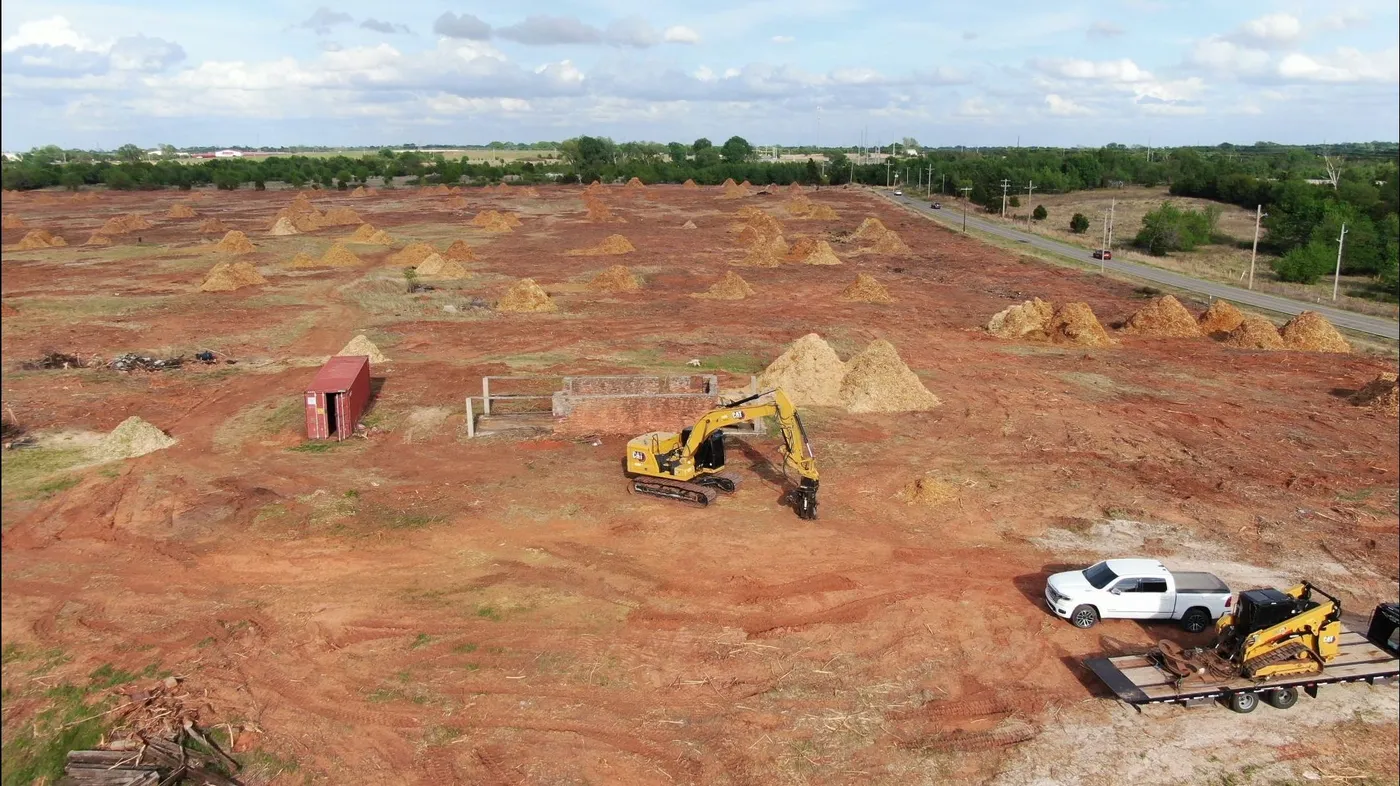
Late fall through winter, roughly November through February, is the best window to clear land in Oklahoma, and it comes down to what the ground and the brush are actually doing that time of year. It is a genuinely good window, not a superstition passed around the industry. It is also not a requirement. Plenty of good clearing jobs happen in July because a build schedule does not wait for the calendar to cooperate.
Here is what actually changes season to season, so you can decide whether it is worth waiting on your property or not.
What winter ground actually gives you
Two things change on an Oklahoma property between late fall and late winter, and both make a real difference on a clearing job.
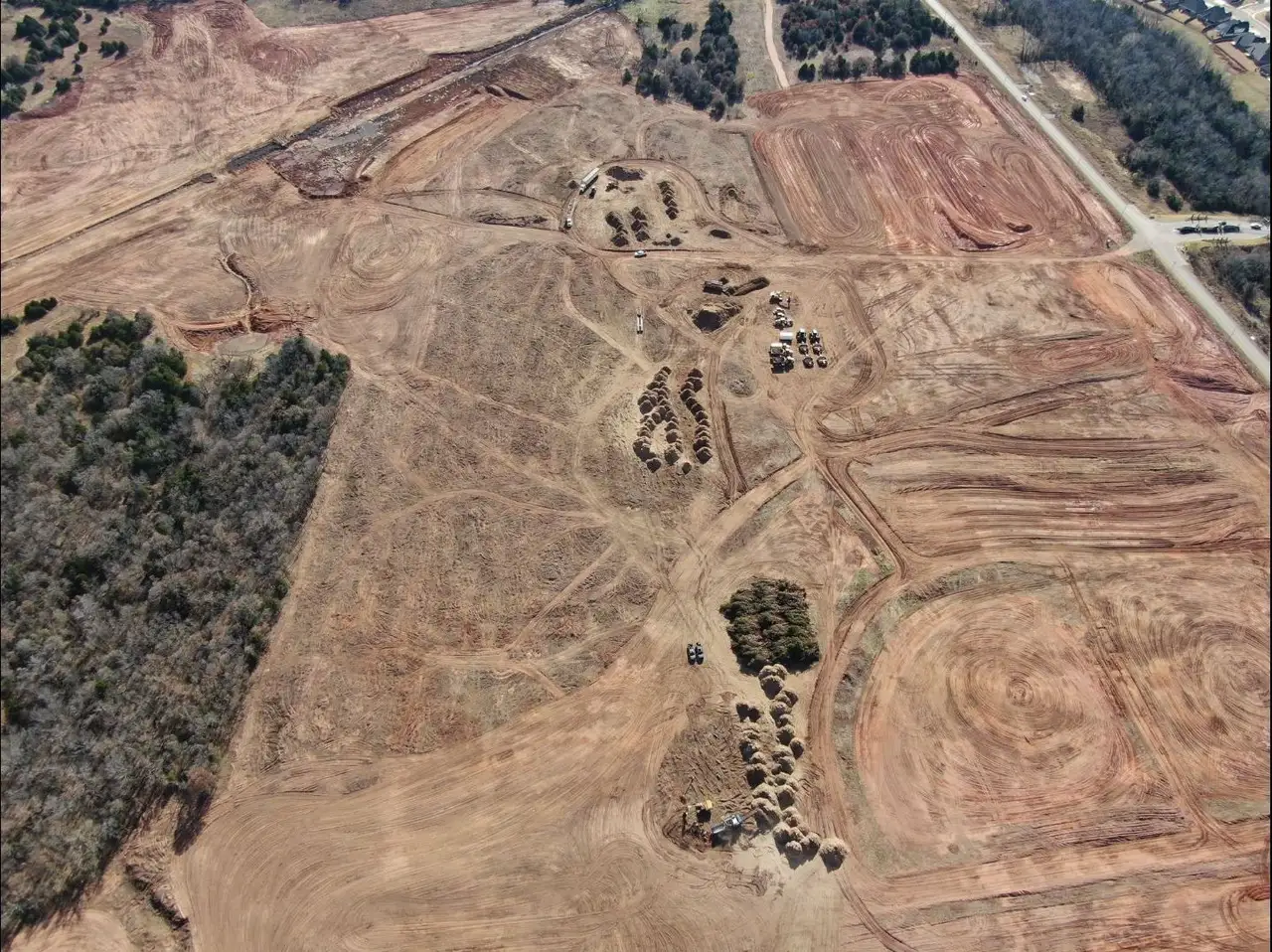
The ground firms up. Oklahoma’s wet season runs heaviest in spring, and red clay-heavy soil that has been sitting saturated turns soft enough that tracked equipment starts rutting it instead of just rolling over it. By late fall, that same ground has typically dried and firmed enough to carry a mulcher, excavator, or dozer with far less disturbance. Less rutting means a cleaner finish and less repair work smoothing the site back out afterward.
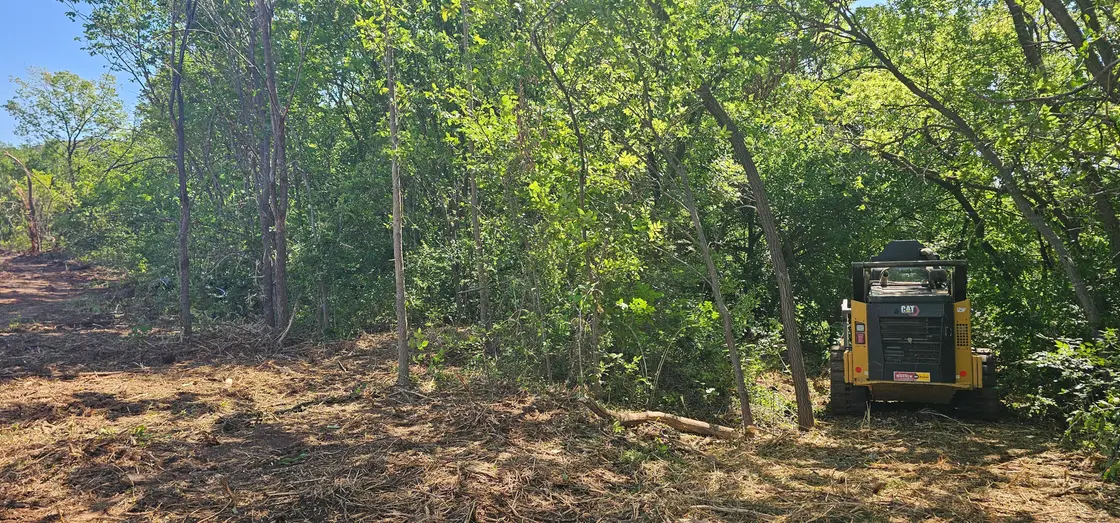
The brush drops its cover. Vines, brush, and deciduous trees lose their leaves, and an operator working a dense lot can actually see what is underneath the tangle instead of guessing. That matters more than it sounds like it should. A property that looks like a solid wall of green in July often turns out to be a manageable mix of a few real trees and a lot of vine and understory once the leaf cover is gone, and seeing that clearly changes how the job gets approached.
Why this is not a rule you have to follow
None of that means summer clearing is a mistake. It means summer clearing has different conditions to manage, and a crew that knows the ground manages them.
Wet, clay-heavy ground in the growing season is slower and messier to work, full stop. Ruts are more likely, mud slows down loading and hauling, and a machine that would glide over firm winter ground can bog down in a saturated spot after a wet spring. Full leaf cover also means more guessing about what is actually standing under the brush until it starts coming down. None of that makes the job impossible. It makes it a job that takes a little more time and a little more judgment on where equipment goes.
If your build schedule, a closing date, or a contract has your timeline locked in, waiting three or four months to save some mud is usually not the right trade. We clear land in every season and adjust how we approach the site to the conditions we find, rather than telling every customer to wait for the “right” month.
The trade-off worth knowing before you book
Winter is a genuinely busier season for land clearing in Oklahoma, for the simple reason that a lot of landowners have heard the same advice in this article and try to book accordingly. If your project has flexibility, book early rather than assuming a slot will be open once the ground firms up. If it does not have flexibility, do not let the calendar dictate a delay you cannot actually afford. A carefully run job in June ends at the same place a winter job does: cleared, usable ground.
Land clearing year-round across the OKC metro
We clear land across the Oklahoma City metro and about 150 miles around it in every season, and we adjust the method and the schedule to the ground we find rather than forcing every job into the same window. If your site has heavy cedar or brush, see how we approach it on our land clearing service page, and for lighter brush and cedar specifically, our forestry mulching page covers the method that usually works best regardless of season.
We will tell you honestly whether your specific property would benefit from waiting for firmer ground, or whether your timeline makes that unnecessary. Estimates are free and done on site. Call (405) 465-2809 or request an estimate.