
- Site Preparation
- Land Clearing
Clearing Land to Build a House in Yukon, Oklahoma
The order of operations we use to take a raw wooded lot to a pad your builder can pour on, and the steps most people do not know to ask about.

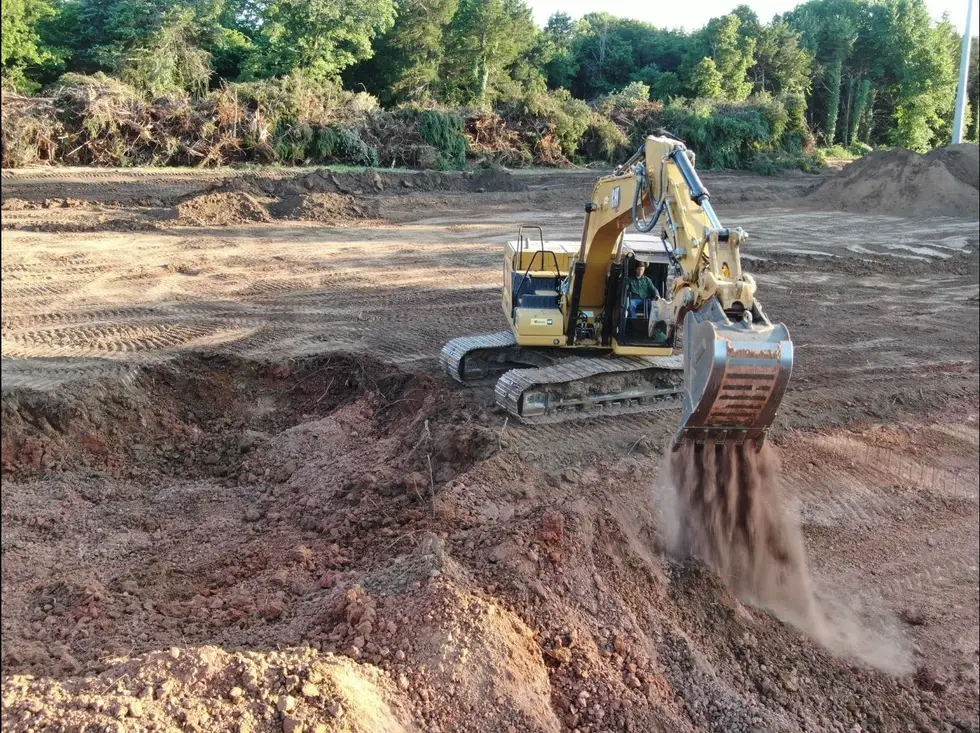
Preparing land to build a house happens in a specific order: walk and plan the site first, clear the trees and brush, grub the stumps and roots out of anything you will build or drive on, rough grade and balance the dirt on site, cut the driveway in, then set drainage and finish grade to your builder’s elevations. Do it in that sequence and you hand your builder a pad they can pour on. Do it out of order and you pay twice for the same dirt.
Most people call us thinking the job is knocking trees down. Clearing is maybe a third of it. The parts that decide whether your slab is still flat in ten years happen after the trees are gone, and they are the parts nobody talks about at the lot closing. Here is how we run it on Canadian County ground, in the order we actually do it.
Walk the lot and plan it before a machine touches anything
The first thing we do on a new build site is walk it with you, and if you have plans, we walk it with the plans in hand. We are looking for seven things: where the house sits, where the driveway comes in off the road, how the utilities run, where the septic system and lateral field go, which way water moves across the property, what the high and low points are, and which trees are worth protecting.
That last one gets overlooked constantly. Mature post oak and blackjack out here grew for fifty or eighty years. You cannot buy that back. If a big oak is twenty feet off the corner of your house and you want to keep it, we need to know before the dozer starts, because keeping a tree is not just about not cutting it. Running loaded equipment over the root zone compacts the soil so hard the tree can die a year or two later, long after everyone has forgotten what caused it. Protecting a tree means keeping traffic off the ground under its canopy, and that changes how we stage the whole site.
The other thing this walk settles is the septic and lateral field. A lot of Canadian County acreage is on a well or rural water and an aerobic system, and the lateral field needs real space in soil that will take it. That space competes with the driveway, the shop pad, and the trees you want. It is a lot easier to move a house fifteen feet on paper than to move it after the pad is built.
Clearing: taking down only what has to come down
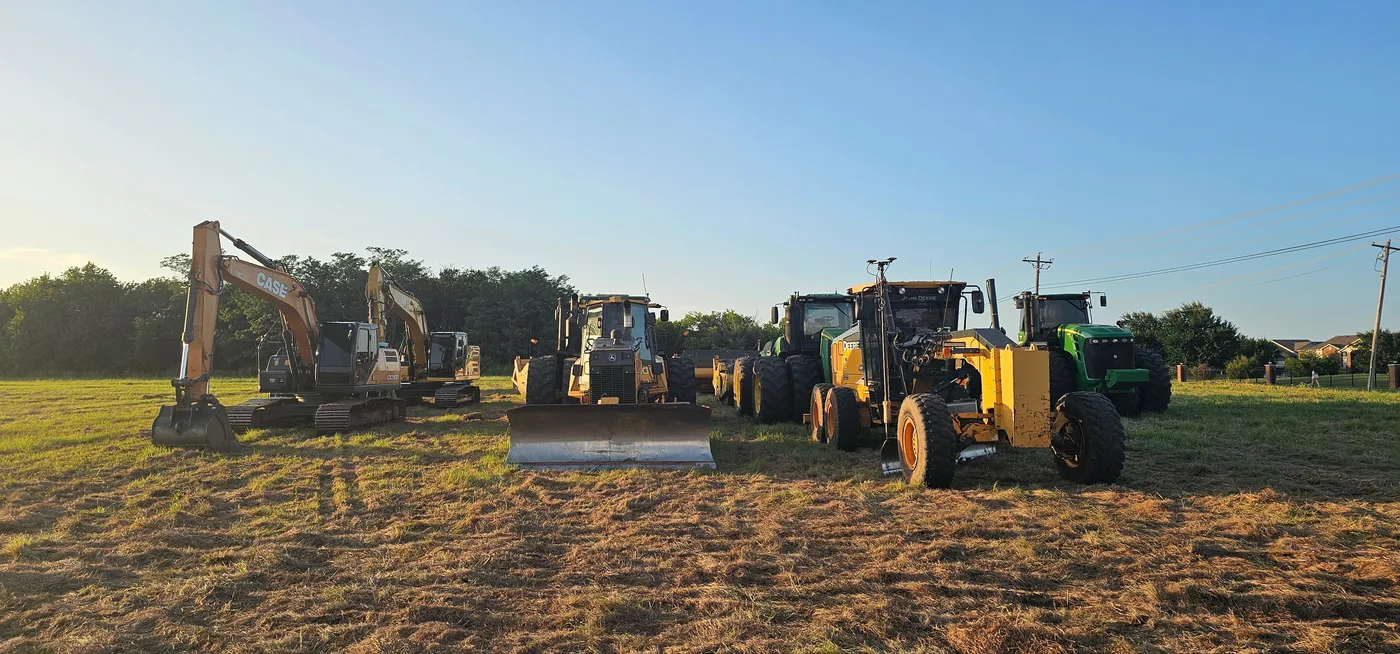
Once the plan is set, we clear. On a home site that usually means the house footprint plus working room around it, the driveway corridor, the utility run, and the septic area. Everything else we leave unless you want it gone.
There are two ways to go about it, and the right one depends on the lot:
- Selective clearing. We take out what is in the way and leave the rest standing. This is the normal choice on a wooded acreage lot where the trees are part of why you bought it. It takes more care and more time per acre, because the machines have to work around what stays. See selective and full land clearing for how we scope it.
- Full clearing. Everything comes out. This fits a dense tract headed for a large pad or a development, or ground so thick with cedar and scrub that leaving pockets of it does you no favors.
If your lot is more brush and cedar than timber, forestry mulching is often the better tool for the parts you are not building on. It grinds standing brush and small trees into a mulch layer in place, with no burning and no haul-off. For the fence lines and the back half of a property, that is usually the cleaner way to get your land back. Brush clearing handles the underbrush and cedar that grows back into pasture that has not been worked.
One caution about the cedar. Eastern redcedar takes over central Oklahoma pasture fast, and people underestimate the volume until it is in a pile. It is light, but it is bulky, and bulk is what drives haul-off cost.
Grubbing: the step people skip, and the one that comes back
If you take one thing from this article, take this one.
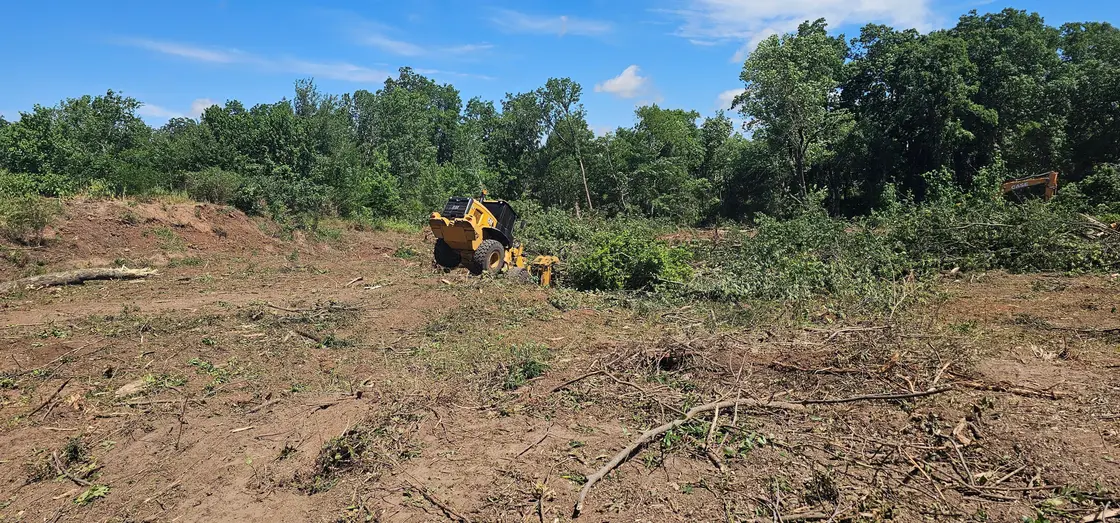
Clearing removes what is above the ground. Grubbing removes what is below it. When a tree is cut at grade, or knocked over and the stump is ground down a few inches, the root system is still in the dirt. On a mature blackjack that is a lot of wood spread out under a wide footprint, and it is going to rot. Wood underground does not stay put. It decomposes, it loses volume, and the soil above it drops into the space it used to fill.
Now put a building pad on top of that. The rot happens on its own schedule under your slab. What you get is differential settlement, meaning one part of the pad drops while the rest stays put. That is the kind of movement that cracks a slab, sticks doors, and separates brick. It is also nearly impossible to fix cheaply once there is a house on it. Foundation repair on a settled slab costs multiples of what grubbing would have cost on the front end.
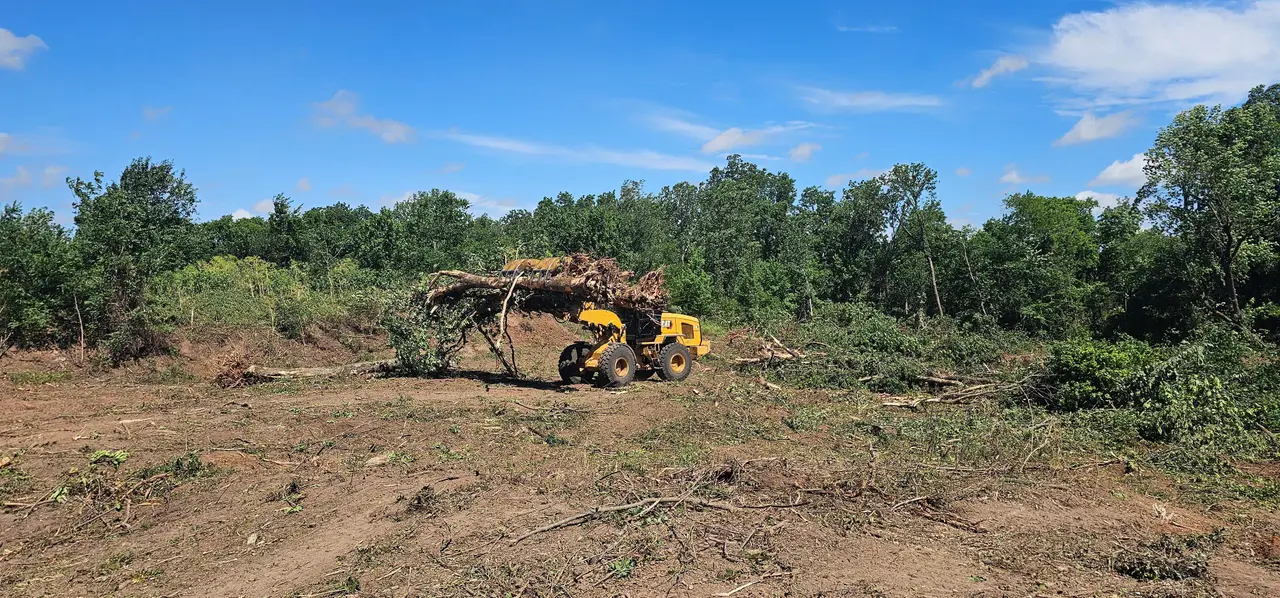
The same goes for buried organic debris in general. Brush, limbs, and chunks of trunk buried in a fill area behave exactly the same way. When we grub, we are pulling root balls and root runs out and getting the organic material out of the footprint, so what is left under the pad is soil we can compact and trust.
Here is an honest trade-off, and it saves people money: you do not need to grub the entire property. Grub the house footprint, the driveway and any drive lane, the shop or barn pad, and anywhere you will place structural fill. Out in the pasture where nothing is going to be built, leaving root systems in the ground is fine, and grubbing it anyway is money spent for no return. Any contractor who wants to grub your whole twenty acres to build one house is selling you machine hours. Ask them what is going on top of it.
Rough grading and balancing the dirt on site
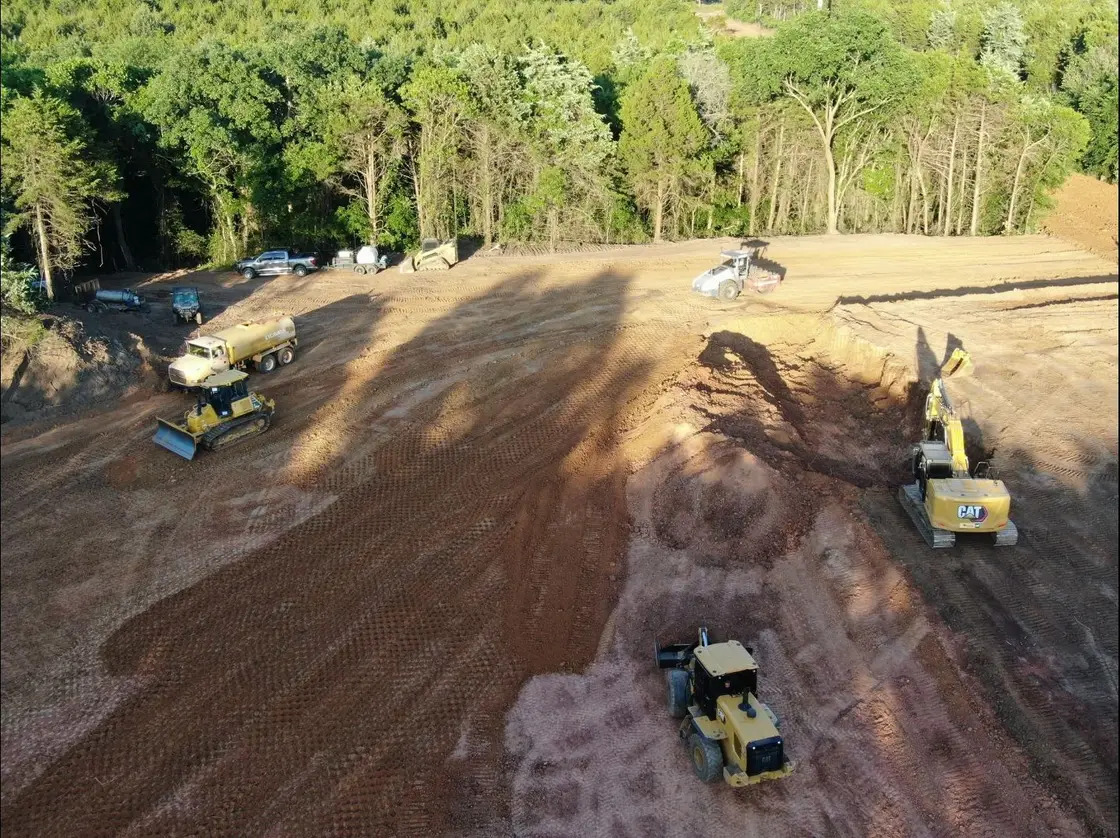
With the site clear and grubbed, we start shaping it. Rough grading is where the lot stops looking like leftover woods and starts looking like a home site. We cut down the high spots, fill the low ones, and work toward the shape the finished site needs.
The number to pay attention to here is how much dirt leaves or comes to the property. Trucking dirt is expensive, in both directions. If we can cut from the high side of your lot and use that material to build up the low side, that dirt costs you machine time and nothing else. If the site is badly out of balance, or the plan sets the pad higher than the lot can supply, you are buying fill and paying for haul.
That is why we look at cut and fill on the walk-through, before anyone commits to a pad elevation. Sometimes lowering a pad a foot, or shifting the house twenty feet toward the natural high ground, saves more money than any other single decision on the job. Your builder may have good reasons to say no, but it is worth asking the question while it is still free to ask. Site preparation and grading and excavation and dozer work are where the bulk of that dirt gets moved.
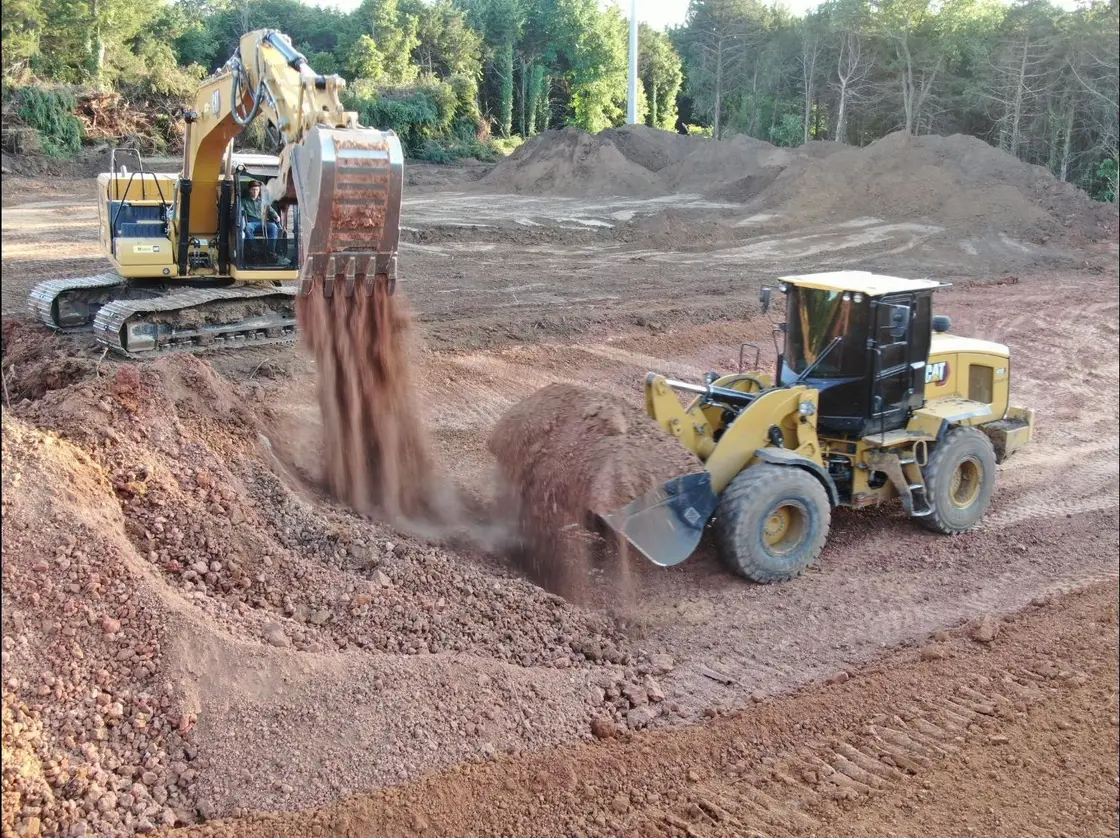
Not all of that fill is created equal, either. Fill under a structure has to be placed in lifts and compacted, not just pushed into a hole. Dumped fill settles. That is a different job from pushing spoil into a low corner of the pasture, and the price reflects it.
Drainage and finish grade: where central Oklahoma lots go wrong
This is the part that separates a pad that lasts from one that gives you trouble, and around here it is not optional.
Central Oklahoma red clay does two things badly. It holds water. After a heavy spring storm, a graded clay lot turns to soup and stays that way for days, because the water is not soaking in anywhere. Then in August the same clay bakes hard and shrinks, opening cracks you can put your hand into. That shrink and swell cycle is already working on your foundation every year. Adding standing water against the pad makes it worse, because saturated clay swells, and clay that alternates between saturated and bone dry moves the most.
So the finish grade has one job above all: get water away from the house and off the site in a controlled way. That means positive fall away from the pad on every side, a lot shaped so water has somewhere to go instead of ponding, and a driveway and building pad that do not act as dams across the natural flow. If your lot has a draw running through it, that draw is going to carry water whether you plan for it or not. Better to plan for it.
What happens when this gets skipped: water stands along the foundation, the crawl space or slab edge stays wet, the yard will not drain for a week after every rain, and the ground under one side of the house cycles wet and dry harder than the other side. None of that shows up at final walk-through. It shows up the first wet spring.
Finish grade is also the last chance to fix anything the rough grade got wrong. Once the slab is poured, your options get expensive fast.
Access: the driveway is a first-week problem, not a last-week problem
People treat the driveway as the finishing touch. It is actually one of the first things that has to work.
Before your builder can do anything, concrete trucks have to reach the pad. A loaded ready-mix truck is heavy, it does not go up soft ground, and it will not risk getting stuck on your lot. Lumber deliveries, the crane for trusses, the septic installer, and every trade after them need the same thing: a route in and a place to turn around. On a raw acreage lot off a county road, that route does not exist yet. Somebody has to build it.
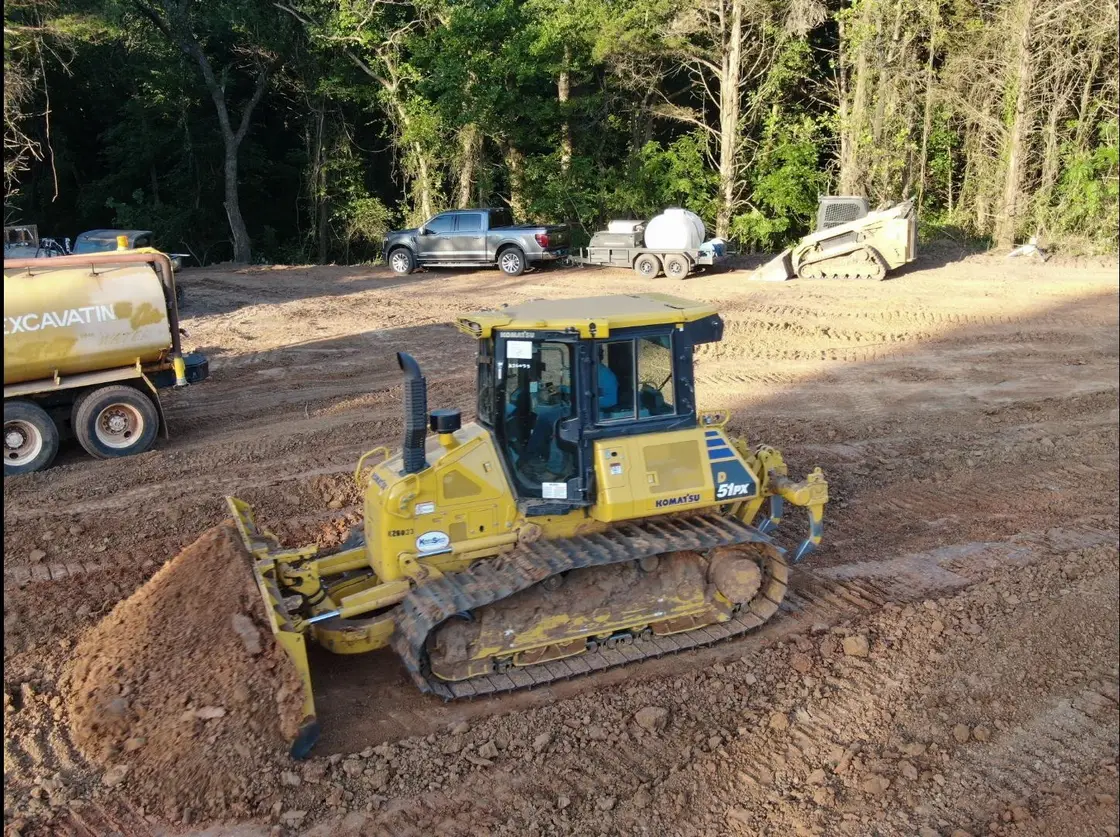
We cut access in early for exactly that reason. That means clearing and grubbing the drive corridor, shaping it, and getting base material down so it holds up under load and holds up when it rains. It also means thinking about where it meets the county road, what the approach looks like, and whether a culvert is needed where it crosses a ditch or a draw. Put a driveway across a natural drainage path without a pipe and you have built a dam. Access roads and driveways are their own piece of the scope, and on rural lots they are not a small one.
The other reason to do it early: our equipment uses the same route. If the drive is right, the whole job runs faster.
Grading to your builder’s plan
The point of all of this is a pad your builder can start on the day they show up. That means we are working to their numbers, not ours.
Before finish grade, we want the site plan and the pad elevation the builder is designing to. From there we set the pad at their target, hold the fall they need away from the house, and confirm the driveway ties in at a grade that works with the garage slab. If there is a plot plan with elevations on it, that is what we grade to. If the builder has a preference on how much the pad sits above finished yard grade, we want to hear it before we are done, not after.
Where this falls apart is when clearing, dirt work, and the builder are three separate conversations that never happen in the same room. The clearing crew leaves stumps because “grubbing was not in our scope.” The dirt contractor grades a pad without knowing the builder needed it four inches higher. Everyone did their piece, and the gaps between the pieces are what cost you.
We handle clearing through finish grade as one job, which closes those gaps because there is nobody to hand off to. That is not magic, and there are good contractors out there who coordinate fine across separate scopes. It just puts the coordinating on you. If you do use separate crews, the thing to insist on is that grubbing and pad elevation are written into somebody’s scope in plain language before anyone mobilizes.
Mistakes we see on Canadian County build sites
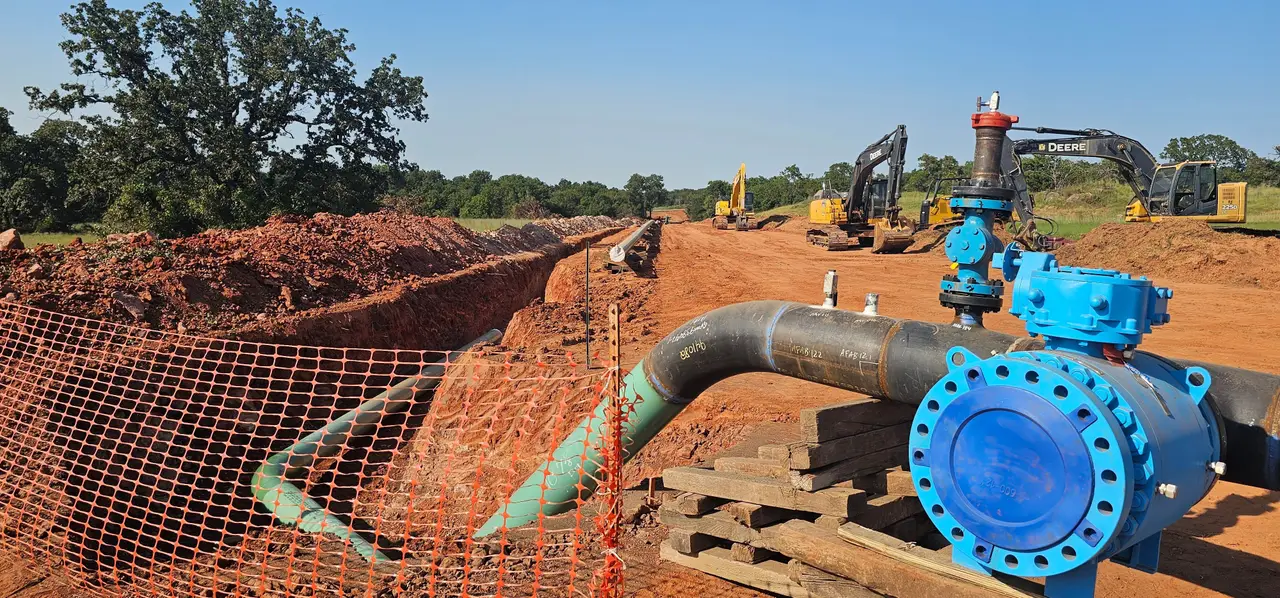
Four of them come up over and over on lots along the SH-4 corridor and out through the Yukon and Mustang acreage.
- Skipping grubbing to save money up front. It is the single most expensive shortcut on this list, and the bill arrives years later as a settled pad. If a bid comes in noticeably low, check whether grubbing is in it.
- Clearing more than the plan needs. Once the trees are down they are down. We have watched people strip a lot bare in one afternoon and then spend the next three summers wishing they had left the shade on the west side of the house. Clear the footprint, the drive, and the working room. Leave the rest until you have lived on it a season.
- Building the pad before drainage is figured out. Setting a pad elevation without knowing where the water goes is guessing. Water is going to move across your lot in the same direction it always has. Shape for it first.
- Starting when the ground is wet. Working saturated red clay is slow, it is rough on the site, and compaction is unreliable in it. There is a real trade-off here: waiting for the ground to dry costs you schedule, and pushing through wet clay costs you money and quality. In a wet spring, waiting two weeks is usually the cheaper decision. We will tell you when we think the ground needs time.
Getting a number on your lot
Cost on a job like this comes down to acreage, how thick the timber and brush are, the terrain, how much room we have to work, how much material has to be hauled off, and how much dirt has to move to hit your builder’s elevations. Those are the same drivers we cover in our breakdown of land clearing cost per acre in Oklahoma, and they are why we price in person instead of over the phone.
Bring us the plans if you have them. If you do not have plans yet, bring us the lot and a rough idea of where you want the house, and we will tell you what the ground is going to ask for. We have been clearing and prepping Oklahoma dirt since 2015, and we work Yukon, Mustang, and the rest of the Canadian County acreage corridor along with the wider OKC metro. You can see the full list on our service areas page.
Call (405) 465-2809 or request a free on-site estimate and we will walk your lot with you. If you would rather send the details first, use the contact page and we will get back to you.