
- Land Clearing
- Forestry Mulching
Forestry Mulching vs. Traditional Land Clearing in Moore, OK
Neither method wins every job. Here is how tree size, stumps, and what you plan to build decide which one your lot actually needs.

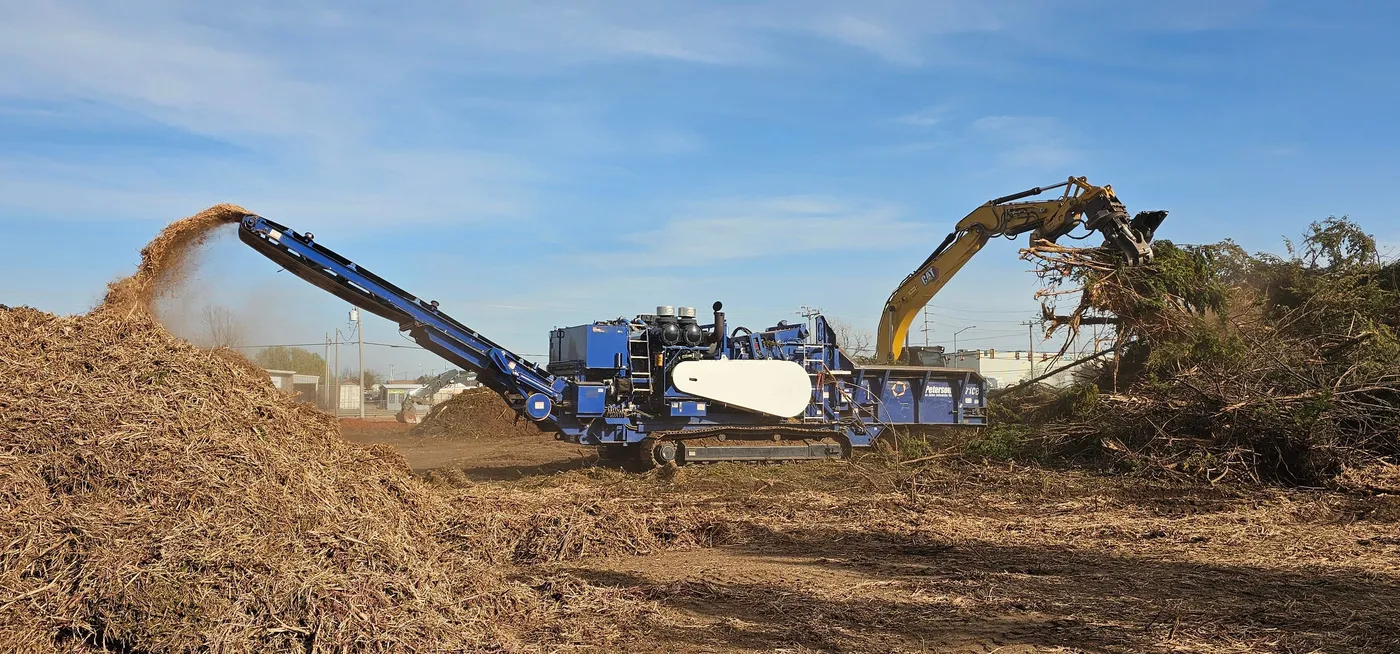
Is forestry mulching better than traditional land clearing? Neither one is better across the board, and a contractor who tells you otherwise is selling you whatever machine happens to be sitting on his trailer. The right method comes down to two things: what is actually standing on your land right now, and what you intend to do with the ground once it is open.
Here is the short version for a lot in Moore. If you have cedar, scrub, and small-to-medium trees, and you want the property usable and walkable again, forestry mulching is usually the right call. If you are pouring a foundation, cutting in a driveway, or working through mature blackjack and post oak, traditional land clearing is the honest answer, because mulching leaves every root ball exactly where it is. Everything below is how we sort that out on a walk-through, so you can figure out which side of the line your lot falls on before you start calling contractors.
What forestry mulching actually does to your land
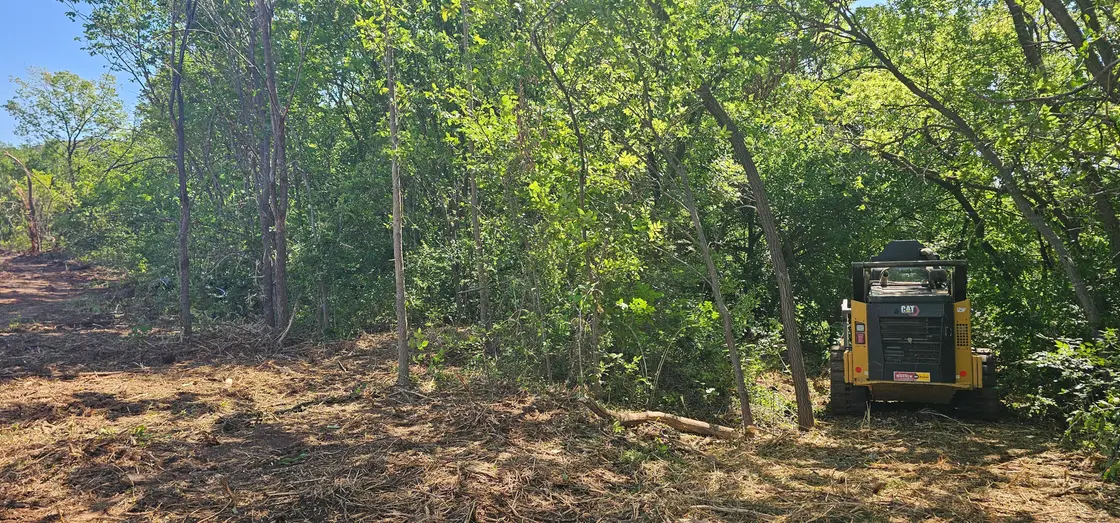
A mulching machine carries a rotating drum with carbide teeth on the front. It takes standing vegetation down where it stands and throws the material to the ground as chips. Nothing gets piled, nothing gets burned, and no dump truck ever backs onto your property. One machine, one operator, one pass in most cases.
What you are left with is a layer of ground-up wood sitting on top of the dirt. On the south metro lots we work around Moore, that layer does something useful right away: it keeps a hard rain from hitting bare red clay and turning the whole place into a rut farm before you have a chance to do anything with it. It also means the trees you took out never leave, which is the whole reason the method is quicker on the right property.
Cedar is where mulching really earns its keep in central Oklahoma. Eastern redcedar has taken over pasture all through Cleveland County, and it grinds fast because the wood is soft and the trunks are small. A cedar-choked five acres that would take days of pushing, piling, and hauling can go down in a fraction of that time with a mulching head.
What traditional land clearing actually does
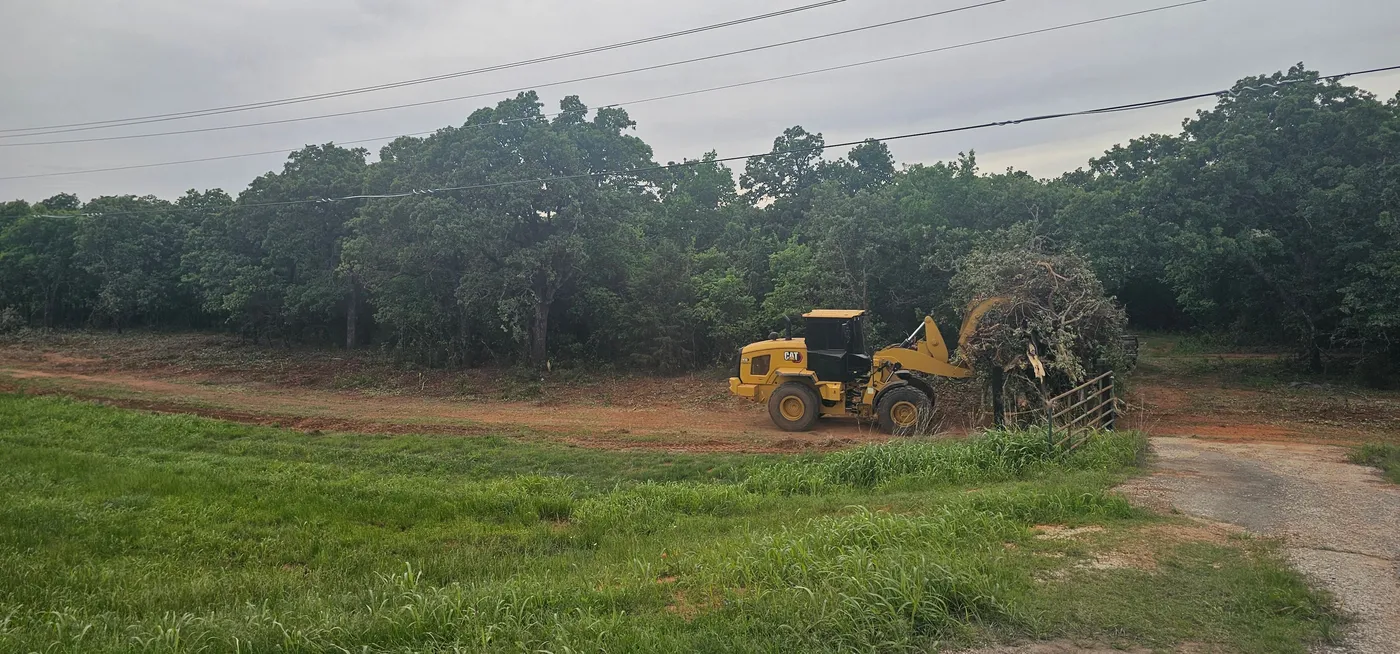
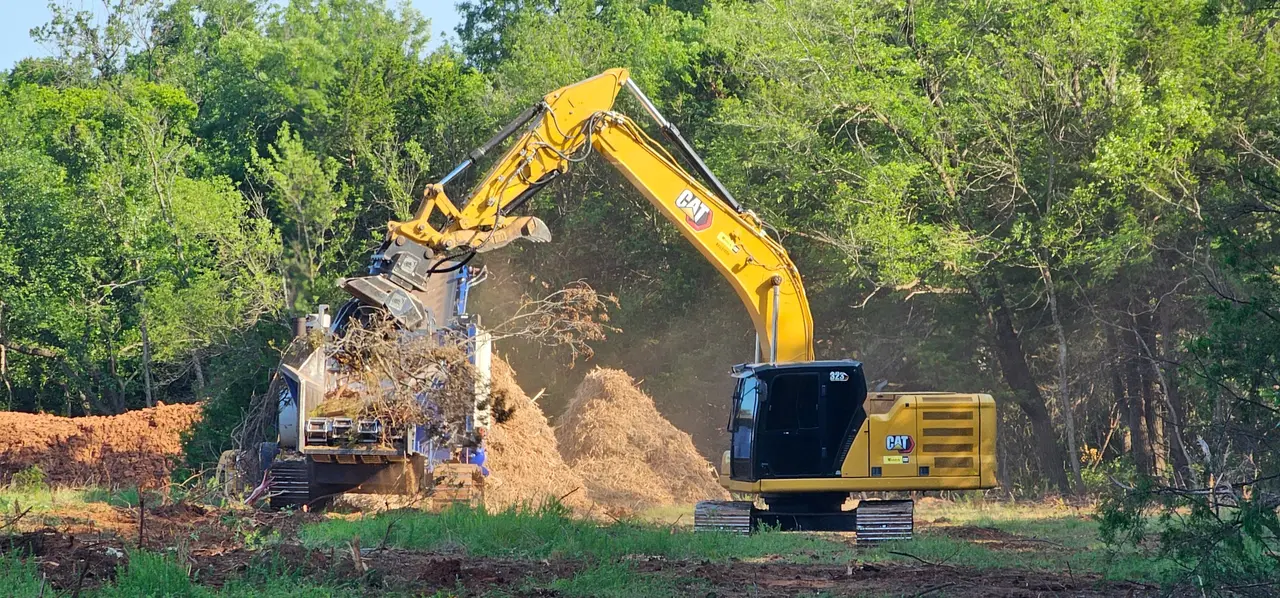
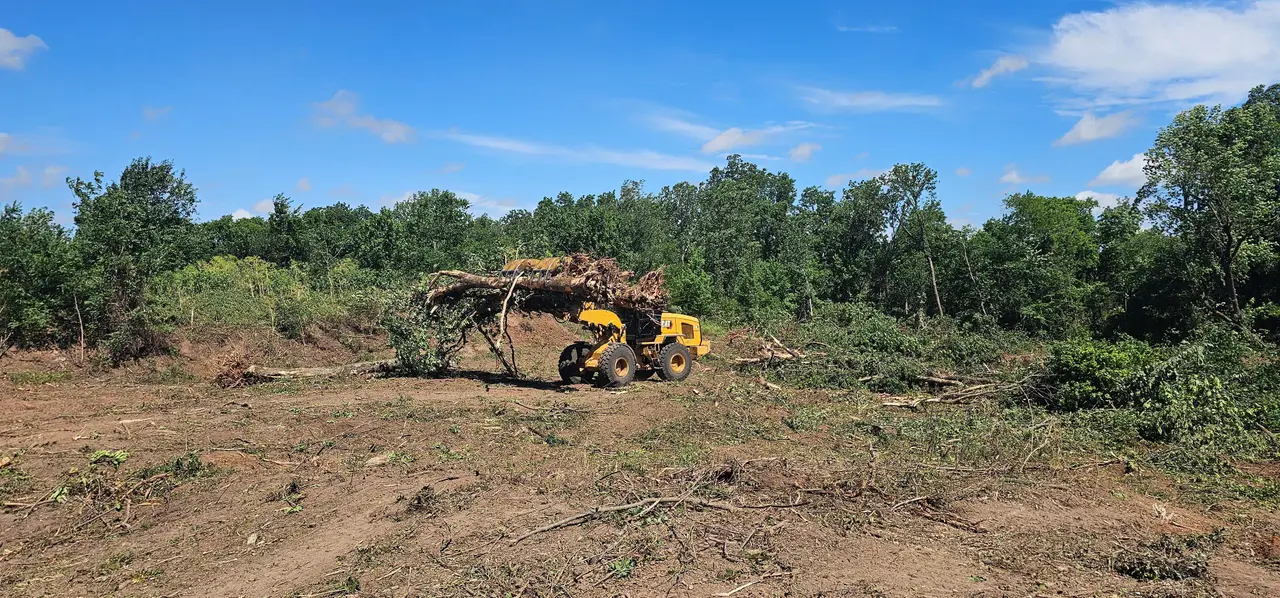
Mechanical clearing is a different set of machines doing a different job. Dozers push, excavators with grapples pick, and the trees come out of the ground instead of getting ground where they stand. Root balls come up with the trunks or get pulled afterward. The material gets worked down on site or loaded and hauled off. Then the ground gets cut, filled, and shaped.
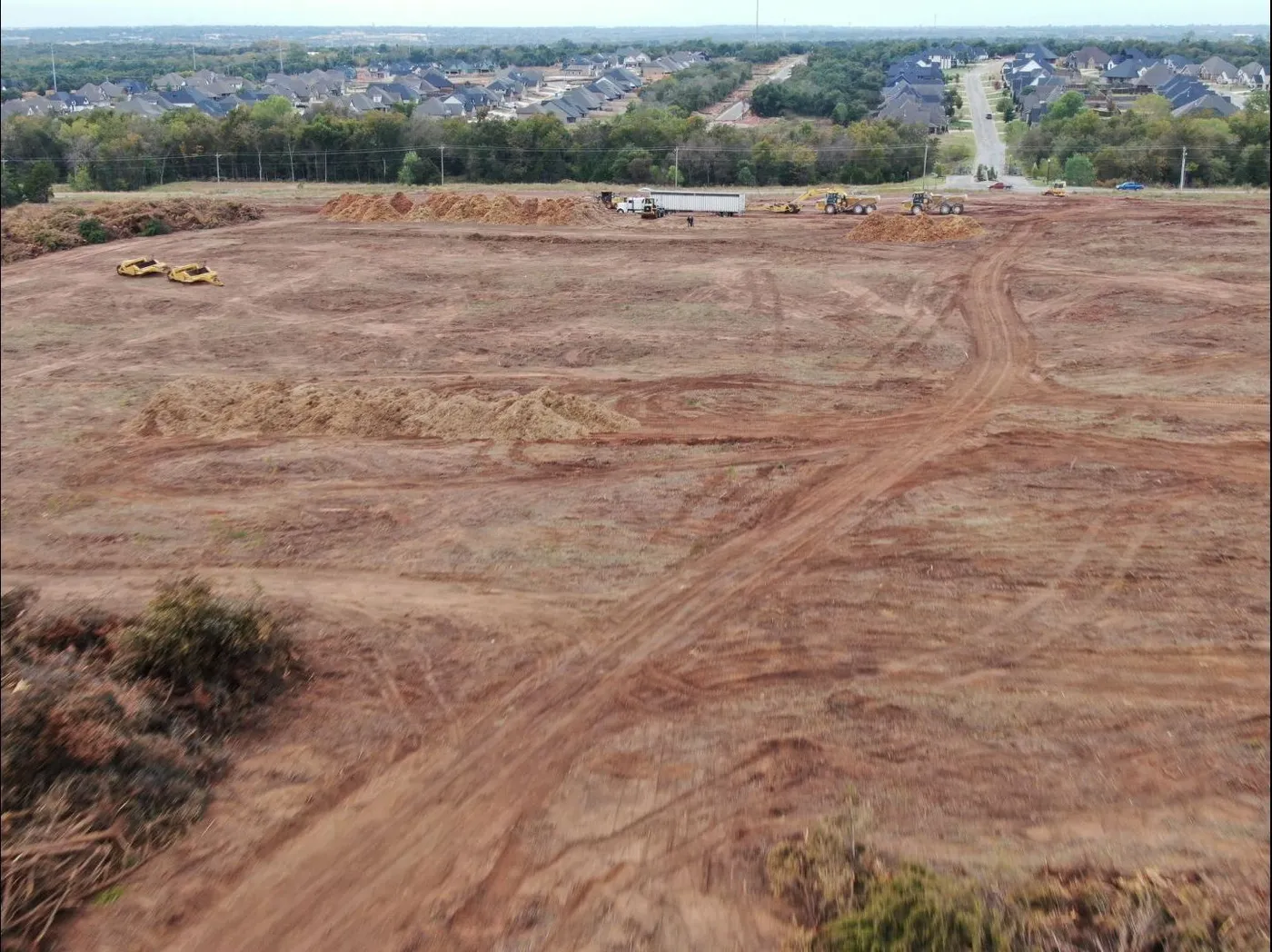
What you are left with is dirt. Clean, open, graded dirt that a survey crew can stake and a concrete crew can work on. That is the point of the method, and it is why every build on a wooded lot ends up here eventually, even if it starts somewhere else.
The tell that you need this route is usually tree size. Once you are into mature blackjack and post oak, the kind with a trunk you cannot get both arms around, a mulching head stops being efficient. It can be done, but you are paying for machine hours while a drum chews through dense hardwood that a dozer would have laid over in a minute. Big timber is a job for full land clearing, and the logs are usually worth working rather than grinding.
Forestry mulching vs. land clearing, side by side
| Forestry mulching | Traditional land clearing | |
|---|---|---|
| Where the material goes | Stays on your land as chips | Worked down on site or trucked off |
| Burning or hauling | Neither | Haul-off, or on-site material handling |
| Stumps and roots | Stay in the ground | Come out, with grubbing |
| How it looks after | A wood-chip blanket over natural contour | Open, bare, graded dirt |
| Ready to build on | No, not without grubbing and grading | Yes, that is what it is for |
| Best fit | Cedar, brush, small-to-medium trees, land you want usable | Building pads, driveways, heavy timber, anything getting graded |
| What pushes the price | Density, tree size, acreage, terrain | All of that, plus haul-off distance and disposal |
Read that table with your own project in mind and one row usually settles it. For most people, it is the “ready to build on” line.
The five questions we ask on the walk-through
These are the things we read standing on the property, in the order they usually matter:
- How big are the trees, and how thick are they? Brush, cedar, and small-to-medium trunks point to mulching. Mature hardwoods point to clearing. Density matters as much as size, because a thick stand of medium timber can be slower to grind than a handful of big ones are to push.
- Does the ground have to be built on? This is the question that overrides all the others. A pad, a slab, a shop floor, or a driveway means the roots have to come out. Mulch left in place is not a foundation-ready site, and no amount of compaction makes it one.
- Can the material stay here? If it can, mulching skips an entire cost category. If it cannot, because of an HOA, a neighbor, or what you want the lot to look like, then you are paying for handling and hauling either way, and clearing starts making more sense.
- What is the terrain and the access like? Tight south metro lots hemmed in by fences and utilities favor a single mulching machine that does not need staging room or truck turnaround. Open acreage with a good approach gives dozers and haul trucks room to be efficient.
- What do you want it to look like in a year? Mulched ground looks natural and a little rough, and it stays that way until the chips break down. Cleared ground looks like a construction site until you do something with it. Both are correct answers depending on what you are after.
The one thing people get wrong: mulch is not a building pad
If you take a single thing from this article, take this. Forestry mulching does not remove stumps and roots. The head can take a stump down close to grade so you never see it, but the root ball is still sitting under there, and it will be for years.
That matters because organic material under a foundation is a problem. Roots rot, the void collapses, and the ground settles unevenly. You find out about it when a slab cracks or a driveway dips, which is long after it is cheap to fix. Getting the roots out is what grubbing is for, and grubbing plus site preparation is what turns cleared ground into a pad you can actually pour on.
So when you read that mulching is the cheaper option, understand the fine print. On light brush and cedar with no build planned, yes, it usually is. On a lot that is going to hold a house, it is not the cheaper option, it is the incomplete one.
Two trade-offs we tell people even when it costs us the job
If you are not building, the smaller job is usually enough. Plenty of people call us ready to pay for a full clear on land they just want to walk, hunt, run cattle on, or look at. If that is your situation, mulching the brush and cedar gets you there for less, and we will say so instead of quoting the bigger scope. On very light scrub and volunteer growth, sometimes even that is more machine than you need and straightforward brush clearing handles it.
If you might build later, mulching now can mean paying twice. We see this on the southern expansion lots around Moore, where somebody buys acreage, mulches it to make it usable, and then decides two years later to put a house or a shop on the same spot. Now the roots have to come out anyway, and the mulch has to be stripped off the pad footprint before anyone grades it. If a build is realistically in the plan for that part of the property, clearing and grubbing it once is the cheaper path, even though it is the bigger invoice today.
Still not sure which one your lot needs?
That is normal, and it is exactly what the free walk-through is for. We look at what is standing, what you want to do with the ground, where the material can go, and how the machines get in. Then we tell you which method fits and why, including the times when the smaller job is all you need. If mulching handles it, we are not going to talk you into a clear-and-grub.
Some properties get both, and that is often the smartest answer on acreage. Clear and grub the two acres where the house, shop, and driveway are going, and mulch the rest so the timber stays, the ground holds, and the place is usable. Splitting the scope that way tends to cost less than treating the whole tract the same.
Cost sits on top of all of this, and it moves with density, tree size, terrain, access, and haul-off rather than with acreage alone. If you want the longer breakdown, our land clearing cost guide walks through what actually sets the number.
We clear and mulch across Moore, Cleveland County, and the rest of the OKC metro service area. Call (405) 465-2809 or request a free estimate and we will walk your lot and give you a straight answer on which method it needs.