
- Site Preparation
- Excavation
Lot Grading and Drainage for Large Estate Lots in Oklahoma
Water finds the low spot on your property whether you planned for it or not. Here is how grading decides where that low spot ends up.

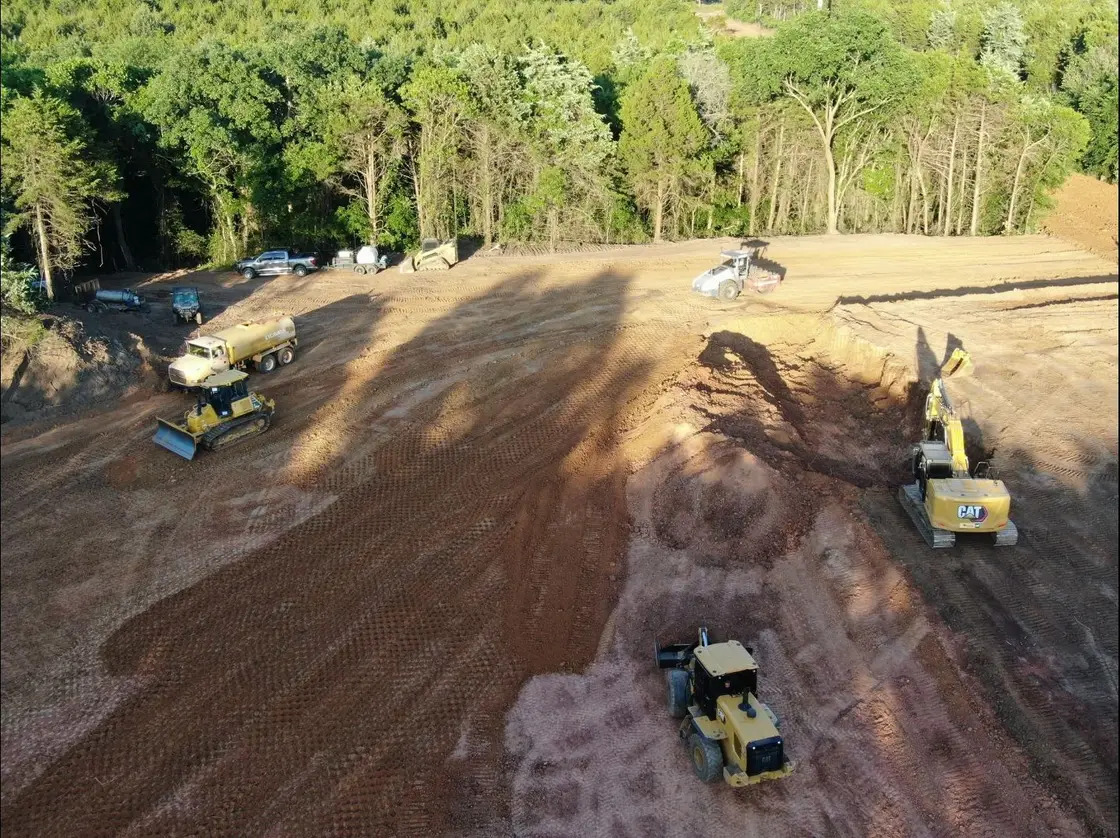
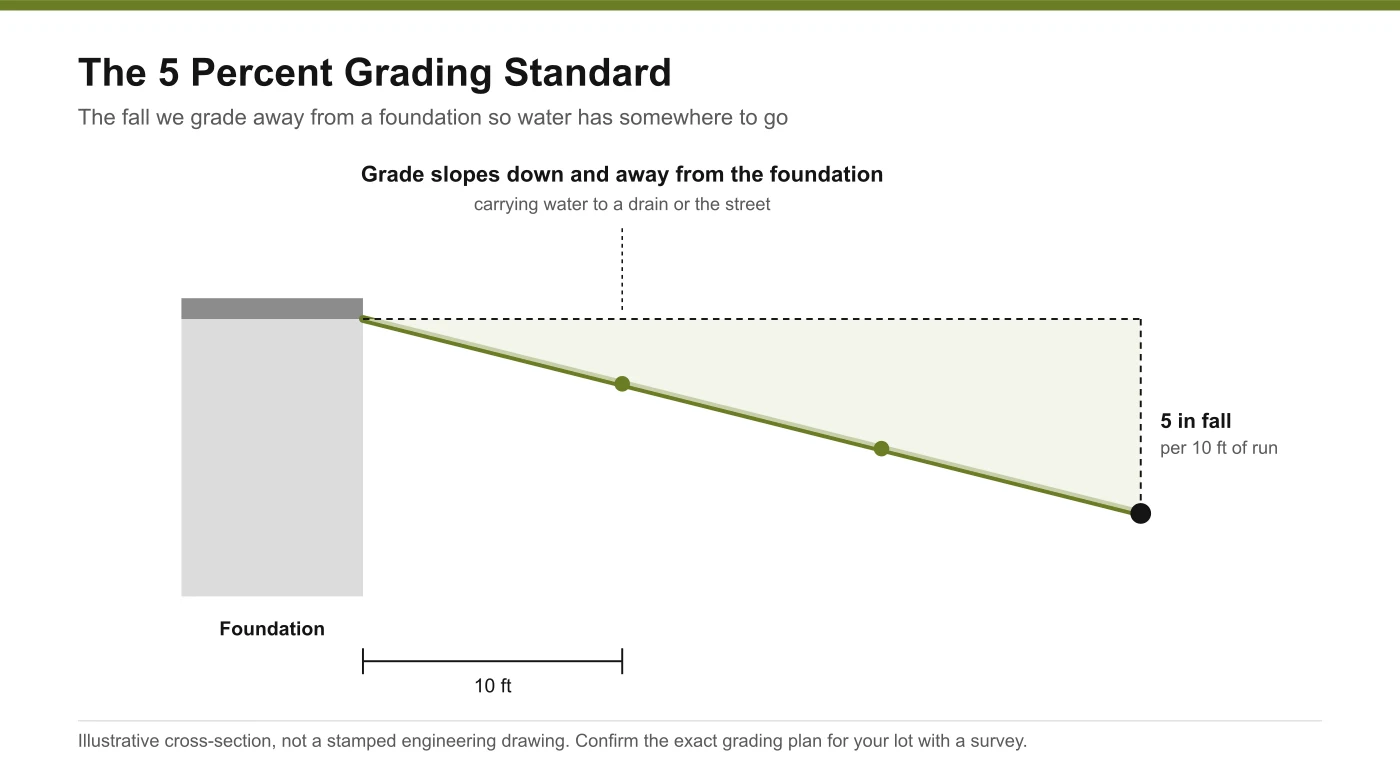
Grading shapes the ground so water runs away from a structure instead of pooling against it. The standard we grade to is a consistent slope, roughly a 5 percent fall, meaning the ground drops about 5 inches for every 10 feet moving away from the foundation, carrying water out to a real drainage path instead of letting it sit. On a large estate lot with real money going into the build, grading is not a finishing touch. It is the thing that decides whether the foundation stays dry for the next thirty years or starts fighting water in year one.
Why this matters more on Oklahoma clay than it would somewhere else
Clay-heavy soil, the kind most of the OKC metro sits on, swells when it absorbs water and shrinks again as it dries. That expansion and contraction cycle, not standing water by itself, is what actually damages a foundation over time. A pad that is not graded to shed water traps moisture right against the structure, and the clay underneath keeps swelling and shrinking through every wet-dry cycle until something gives: a cracked slab, a shifted wall, a door that suddenly does not close right.
Oklahoma does not make this a slow-moving problem. The state averages 36 to 42 inches of rain a year, and a lot of it comes in hard spring storms rather than gentle, steady rain the ground can absorb evenly. A grading mistake on a lot like that does not sit quietly for a decade before it shows up. It usually shows up the first real season.
The slope water actually needs
The practical target is that 5 percent fall away from the structure in every direction, moving water out to a drainage swale, a storm drain, or the street rather than letting it collect anywhere near the foundation. That slope has to be continuous, not just present somewhere on the lot. A yard that slopes away from the house on three sides and pools on the fourth still has a drainage problem, it just took longer to notice.
On a large estate lot, this gets more complicated than a standard residential pad, because there is more ground to move water across and often more low points, driveways, and outbuildings competing for the same drainage path. Getting the grading plan right before dirt moves matters more, not less, the bigger the lot is.
Compaction is the part that gets skipped
Grading the surface right does not mean much if what is underneath it was not compacted properly. Any area built up with fill dirt has to be compacted in layers as it goes in, not piled up and smoothed over at the end. Skipping that step is one of the most common reasons a lot that looked perfectly graded at completion develops a low spot or an uneven settle a year or two later, once the loosely placed fill finally compresses on its own under weather and weight.
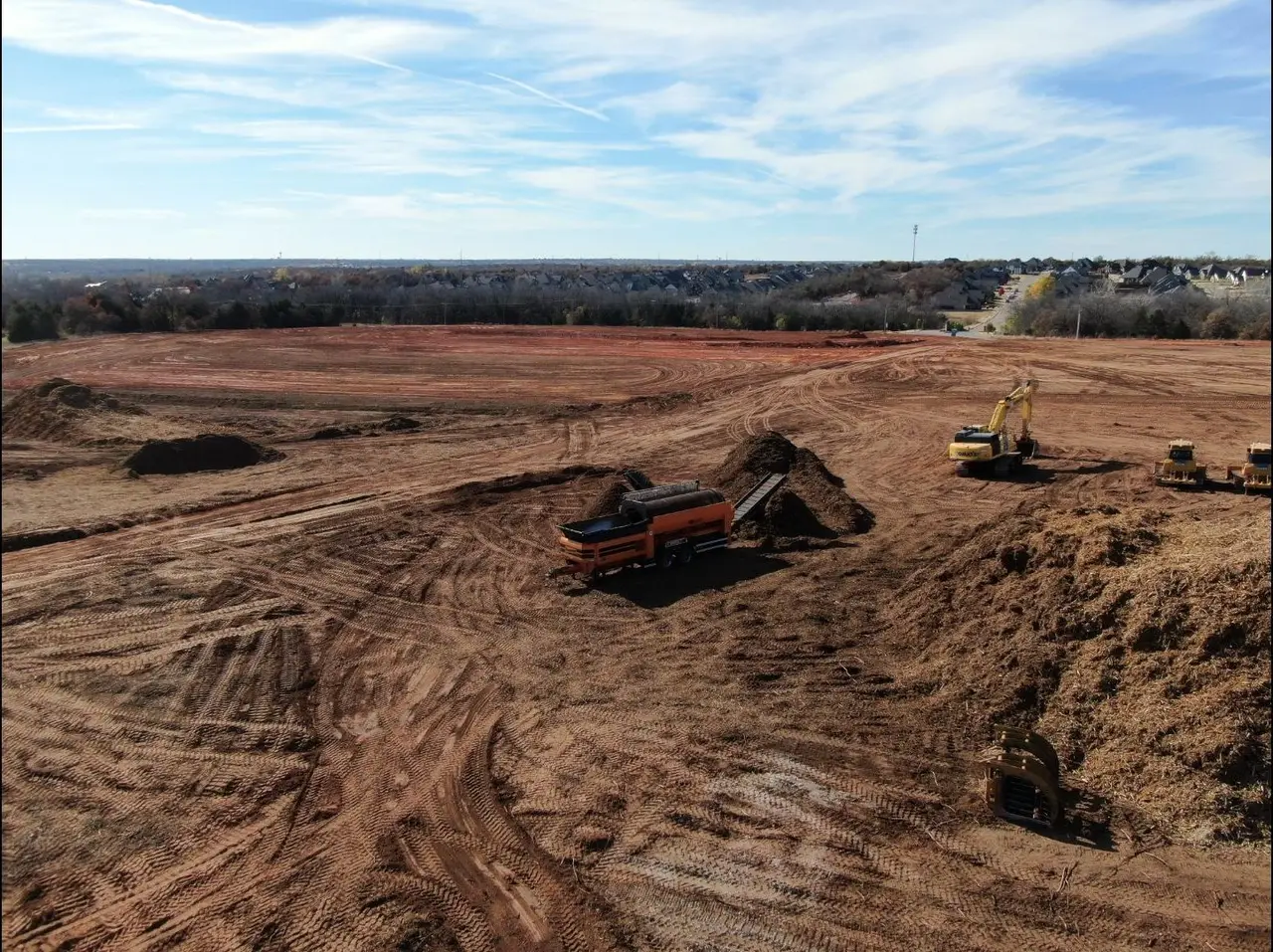
We compact fill in lifts as part of every grading job, which is more time on site than just pushing dirt into shape, and it is the difference between a pad that holds its grade and one that quietly stops draining correctly a couple of wet seasons in.
What we actually do on a grading job
- Walk the lot and read the natural drainage. Every property already has a direction water wants to go. We work with that where we can, rather than fighting it.
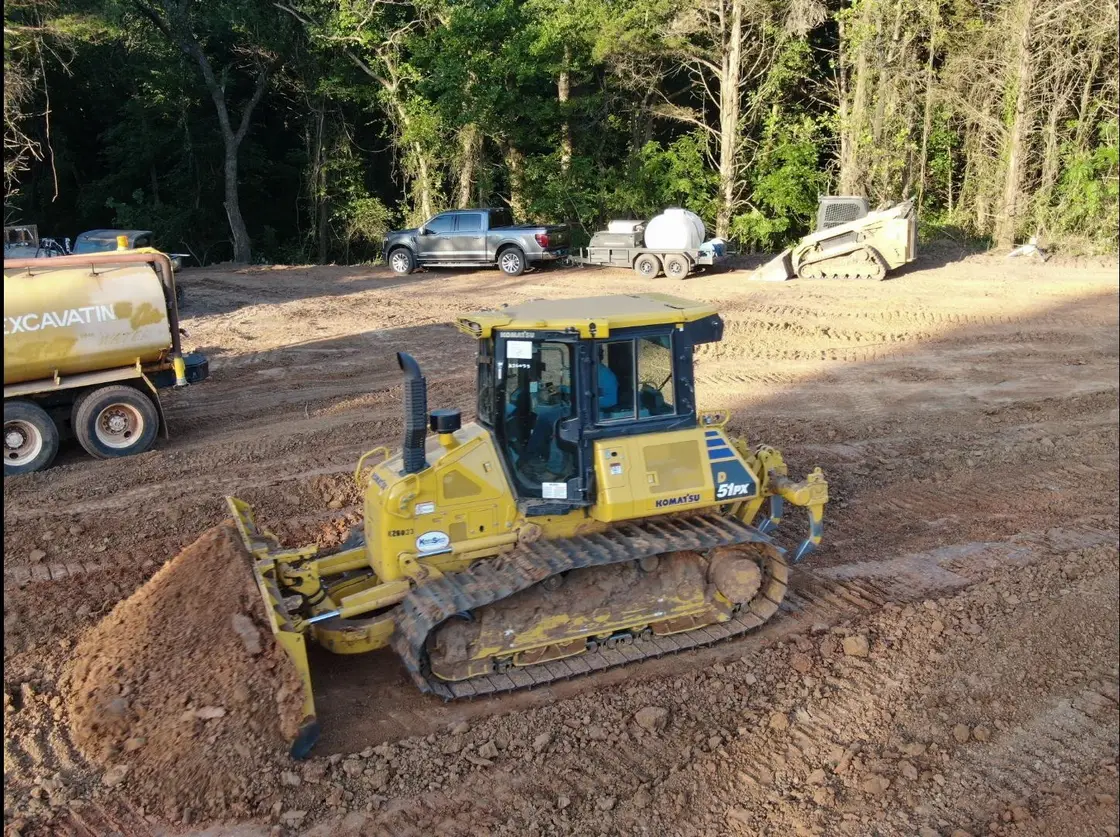
- Set the finish grade around the structure, targeting a consistent fall away from every side of the building envelope.
- Bring in and compact fill in lifts anywhere the existing grade needs to be built up, rather than just smoothing loose material into shape.
- Rough grade the rest of the lot to move water toward a real drainage path, whether that is a swale, a storm drain, or the street.
- Final grade and confirm the slope holds the fall it needs before we call the job done.
Grading for estate lots in the NW OKC and Edmond corridor
We grade large estate and custom home lots across the Oklahoma City metro and about 150 miles around it, including the NW OKC and Edmond corridor where a lot of this scale of build happens. For the full picture of what comes before grading on a raw lot, see our site preparation page, and for the excavation and dirt work that often goes hand in hand with it, our excavation page.
Every grading plan depends on the specific slope, soil, and drainage path of that lot, which is why we do not price it off a survey alone. Estimates are free and done on site. Call (405) 465-2809 or request an estimate.