
- Right of Way Clearing
- Forestry Mulching
Right-of-Way and Easement Clearing in the Oklahoma City Metro
Utility corridors, pipeline easements, and fence-line right of way do not clear themselves, and they do not stay clear on their own either. Here is how the work actually goes.

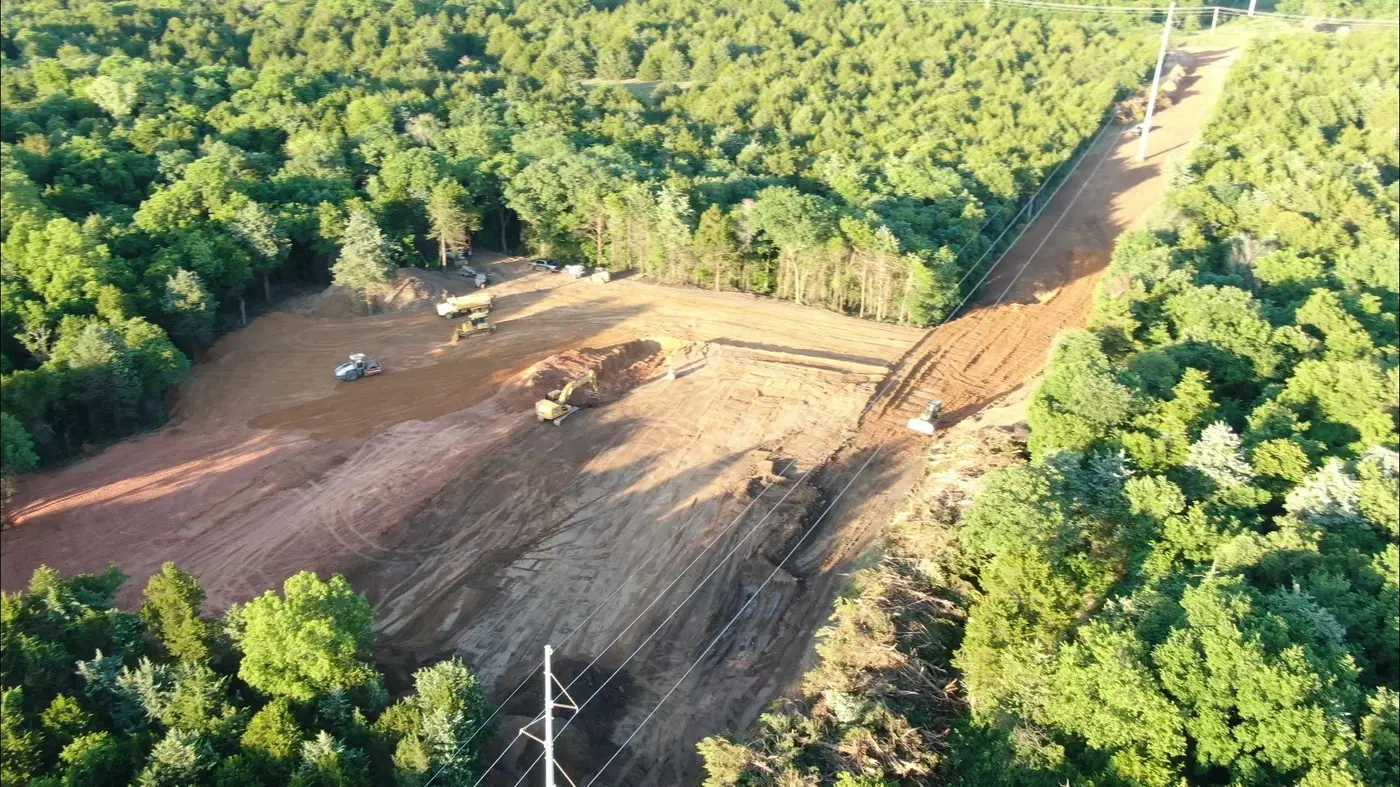
Right-of-way clearing means cutting or mulching the vegetation inside a defined corridor, whether that is a utility easement, a pipeline right of way, an access easement, or a fence line, so the corridor stays passable and the growth is not fouling whatever runs through it. It is not the same job as clearing a building lot, and treating it like one is the most common mistake we see, both from landowners hiring the work and from crews who show up without the right equipment for a linear job.
The corridor itself decides most of what happens next. A utility company maintaining a power line easement, a pipeline operator keeping a route walkable, a landowner clearing a fence line that has grown up solid, and a developer opening an access easement to a back parcel are four different jobs that all get called “right-of-way clearing.” Here is how each one actually works.
The step that comes before any of them: locate the corridor
Nothing gets cut, mulched, or grubbed in a right of way before we know what is buried in it. That is not a courtesy step. In Oklahoma it is the law: call or file with OKIE811 before any digging, grubbing, or ground-disturbing work near a utility corridor, and the member utilities mark their lines for free.
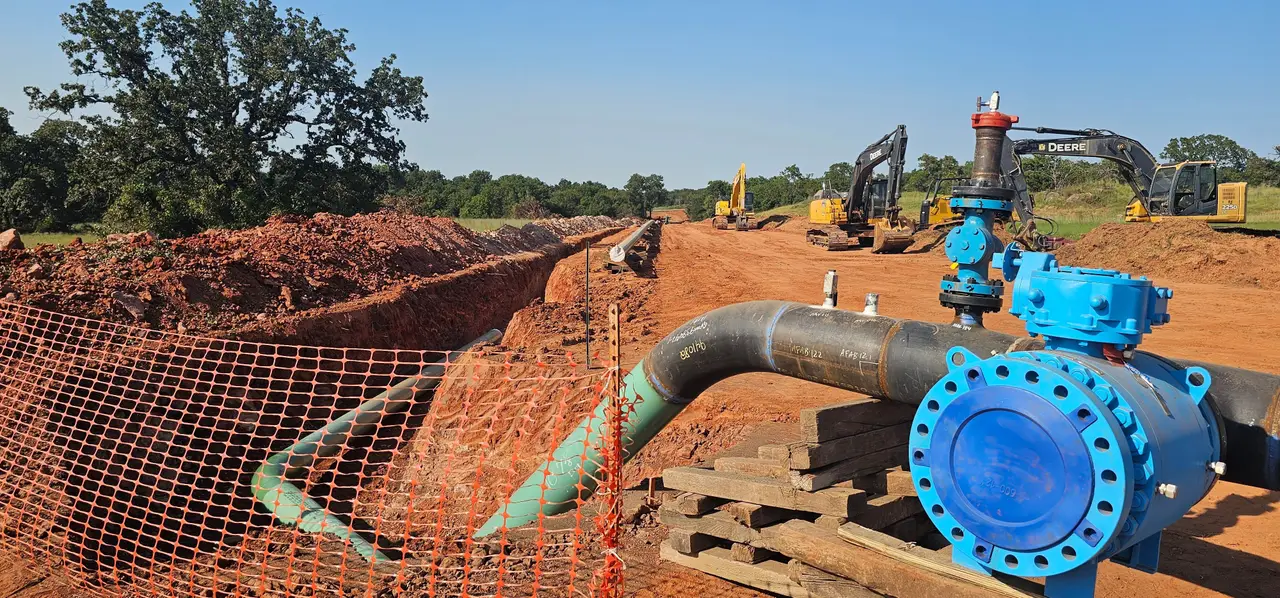
This matters more on a right-of-way job than almost anywhere else we work, because the entire reason the corridor exists is usually the thing buried or strung through it. A pipeline right of way has a pipe under it, often shallower than people assume. A utility easement has cable, conduit, or a line running through the exact strip we are clearing. Skipping the locate on a fence line at the back of a property feels low-risk until the fence line turns out to be shared with a buried irrigation main nobody remembered.
Why a corridor is a different job than a lot
Clear a building lot and the job is done. Clear a corridor and the job starts a maintenance cycle, because the ground on either side of it is still there and still capable of growing brush and cedar right back into the space you just opened.
Most utility and pipeline corridors we work get maintained on a cycle, commonly every two to four years depending on how fast growth comes back on that specific stretch. That is a real number worth planning around if you are the one paying for it, whether that is a utility company budgeting corridor maintenance or a landowner keeping a shared fence line open. A one-time full clearing followed by nothing is not a right-of-way plan, it is a corridor waiting to close back in.
Eastern redcedar is usually the reason it closes back in fastest. We wrote a full breakdown of why cedar takes over faster than other Oklahoma brush in our pasture reclamation guide, and the same mechanism applies to a corridor edge: cedar is evergreen, it competes for water year-round instead of just through a growing season, and a disturbed strip of ground like a right of way is exactly the kind of open edge it establishes on first. A corridor that gets cleared once and then ignored is often more cedar-choked five years later than it was before anyone touched it, because clearing opened up the light cedar seedlings needed.
Matching the method to the corridor
| Corridor type | Typical growth | Method | Recurs |
|---|---|---|---|
| Utility easement (power, cable) | Brush, cedar, volunteer trees under the line | Forestry mulching along a set width | Every 2 to 4 years |
| Pipeline right of way | Brush and small timber along the route | Mulching or grapple, kept off the pipe depth | Every 2 to 4 years |
| Fence line | Cedar, brush, vines grown into the wire | Mulching or grapple worked tight to the fence | Ongoing, owner-driven |
| Access easement | Mixed brush blocking a route to a back parcel | Grapple and dozer for a drivable width | As needed |
Forestry mulching is the right call for most utility and fence-line corridors: one machine, one pass, the material stays down as ground cover instead of getting piled or hauled off a strip that is often narrow and hard to stage equipment in. Wider or heavier corridors, especially where a dozer needs to open real width for access, call for a grapple and dozer working together instead.
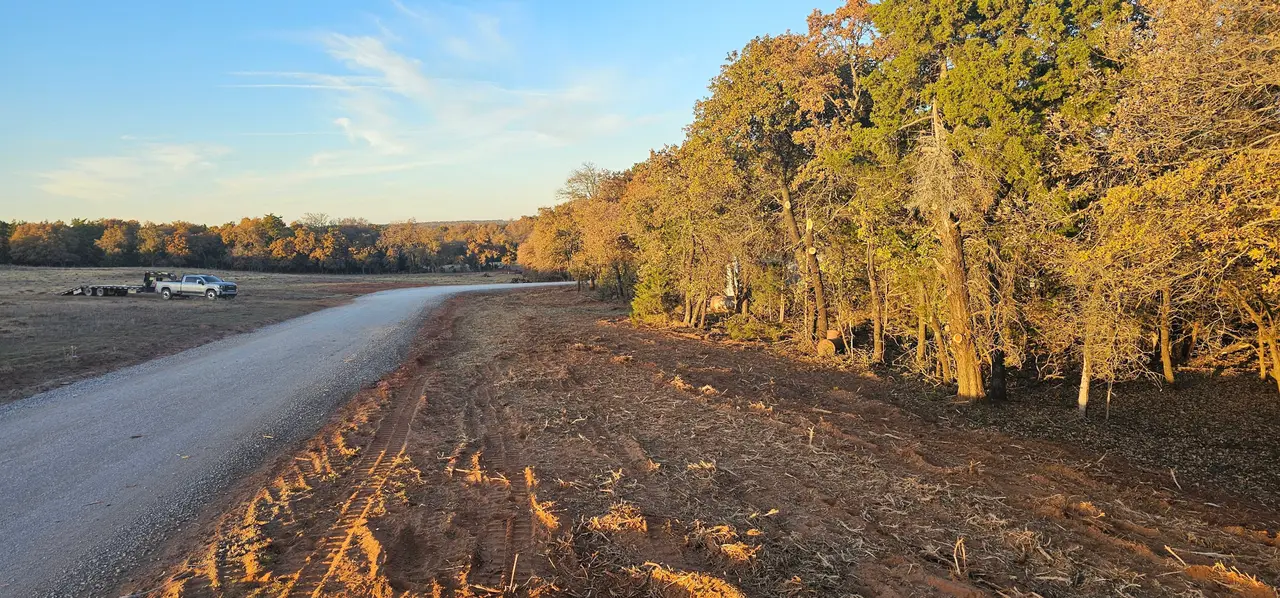
What a right-of-way job usually does not need is full grubbing. Pulling every root ball out of a utility corridor is site-preparation-grade work, and most easements do not require it since nothing is being built there. If your corridor work is actually the first step toward building an access road or a pad, that changes the scope, and we will tell you honestly when a job has crossed from maintenance clearing into site preparation.
Read the easement before you assume you owe the work
Here is the part that saves people money before we ever bid a job: the recorded easement document, not general assumption, decides who is responsible for maintaining it. Some easements put the clearing obligation on the utility or pipeline company. Some put it on the property owner. Some split it by which side of the corridor the growth sits on.
We get called from both directions, utility and pipeline companies maintaining their own corridors and landowners clearing a fence line or access easement on their own property, and the honest first question in either case is whose obligation the work actually is. If you are a landowner getting pressure to clear a utility easement, check the recorded document before you pay to do work that may not be yours to do.
Right-of-way and easement clearing across the OKC metro
We clear utility corridors, pipeline easements, access easements, and fence lines for utility and pipeline companies as well as individual landowners, across the Oklahoma City metro and about 150 miles around it. Crews are fully in house, so the person who walks the corridor with you and scopes the job is the same person running the equipment on it.
For the wider picture on how we choose forestry mulching versus other clearing methods, see our forestry mulching and right-of-way service page. For general clearing questions beyond a defined corridor, our brush clearing page covers standing vegetation removal on open ground.
Estimates are free and done by walking the actual corridor with you, not off a map. Call (405) 465-2809 or request an estimate.