
- Grubbing
- Land Clearing
Stump Grinding and Root Grubbing: What's the Difference
One leaves the roots in the ground, one takes them out. Here is what actually decides which one your property needs after tree removal.

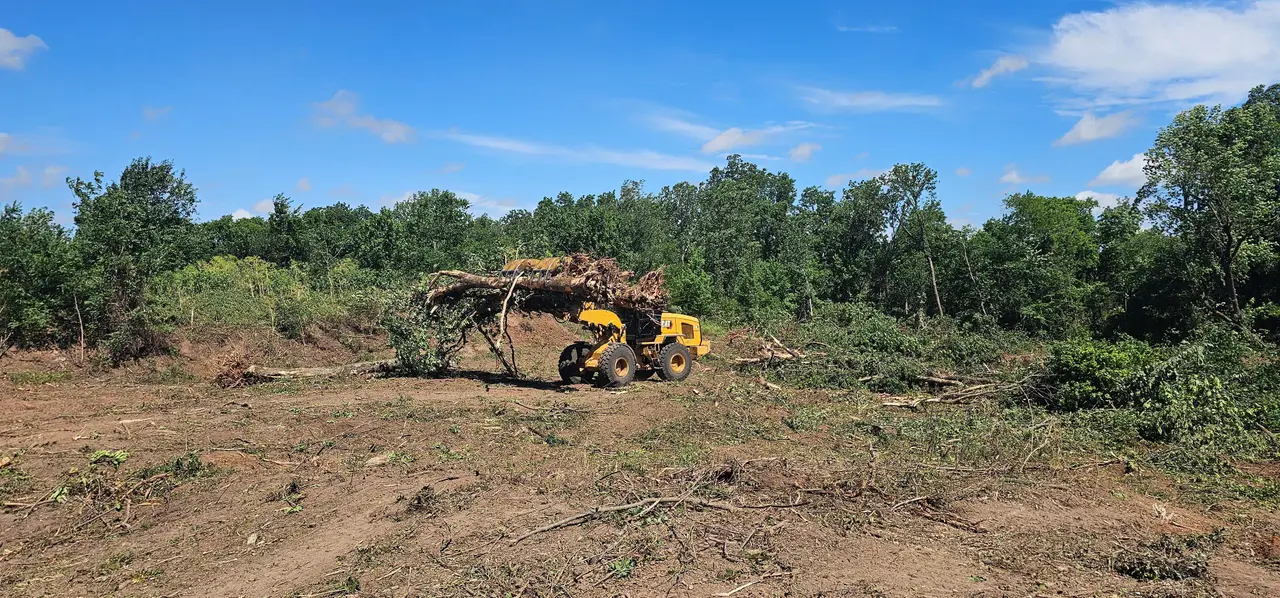
Stump grinding chews the visible stump down into mulch and leaves the root system in the ground. Root grubbing digs the entire root ball out, roots and all, so nothing is left below grade. They get talked about like two names for the same job, and they are not. The difference between them decides whether your ground is ready for a foundation or just ready to look finished, and those are not the same thing.
What each one actually does
A grinder is a spinning cutting wheel that reduces the stump to chips, working down a foot or two below the visible top of the stump and stopping there. It is fast, it is one machine, and what comes out of it, wood chips, has real value as mulch. What it does not touch is the root system spreading out underground, which stays exactly where it was, slowly decaying over years.
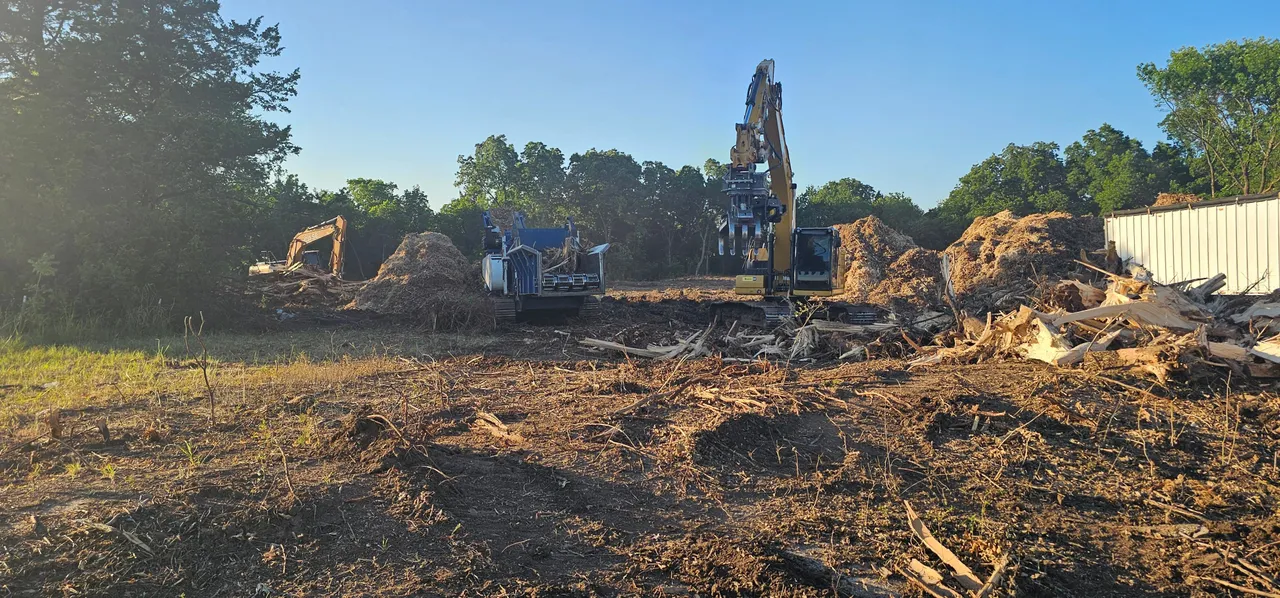
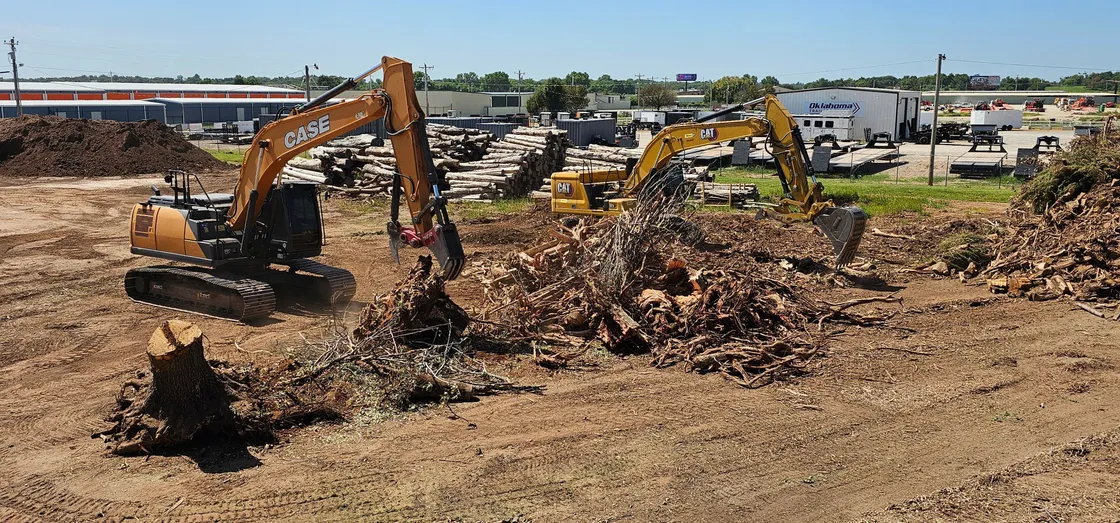
Grubbing is a different operation entirely. An excavator or wheel loader digs the stump and its full root system out of the ground, roots and all, leaving a hole that then gets backfilled and compacted. It takes longer, it disturbs more ground, and it is the only one of the two that actually removes the root system instead of just hiding it.
The one question that actually decides which one you need
Is anything heavier than foot traffic going to cross that spot.
If the answer is no, grinding is the right call. A pasture, a yard, a wooded corner nobody drives across: a stump cut low to grade is not a problem there, and grinding gets you a clean-looking result faster and for less money.
If the answer is yes, a foundation, a driveway, a parking pad, equipment traffic, anything with real weight, grubbing is not optional. A stump ground down to grade still has a complete root system rotting in the ground underneath it, and organic material does not compact the way soil does. Build on top of that and the roots keep decomposing under the load, which shows up months or years later as an uneven settle: a cracked slab, a dip in a driveway, a soft spot that was not there when the concrete went in.
| Stump grinding | Root grubbing | |
|---|---|---|
| What happens to the roots | Left in the ground | Removed entirely |
| Speed | Faster, one pass | Slower, full excavation |
| Cost | Lower | Higher |
| Right for | Pasture, yard, no heavy traffic | Foundation, driveway, pad, equipment traffic |
| Risk if used wrong | None on open ground | Settling, cracked concrete, buried hazard |
Sprouting: the part that catches people off guard
Grinding down a stump does not always end the story for that tree. Some Oklahoma species resprout from the roots left behind, especially fast-growing hardwoods like elm, hackberry, and mulberry, where the root system stays alive even after the visible stump is gone. You will see new shoots coming up around a ground stump within a season if that is what you are dealing with.
Cedar is the opposite case, and worth knowing if you read our pasture reclamation guide: eastern redcedar does not resprout from a cut stump at all, cut below the lowest green limb, it is finished. What comes back on a cedar-heavy property is new seedlings from seed already in the soil, not sprouts from the stump itself, which is a different maintenance problem with a different fix.
Ask what species you are dealing with before you assume grinding closes the book on a tree. Sometimes it does. Sometimes it is the start of a few seasons of cutting sprouts.
Why the price gap is real, and why it is not the whole decision
Grubbing costs more than grinding, and that gap is genuine: it is a full excavation instead of a single grinding pass, and it includes properly backfilling and compacting the hole afterward, not just pulling the roots and walking away. Skipping compaction after grubbing creates the same settling risk grubbing was supposed to solve in the first place.
That real cost difference is exactly why the wrong call is expensive twice. Grinding a stump to save money on ground that was always going to carry a foundation does not actually save anything, it just moves the cost to later, after the crack shows up and the fix has to happen anyway with a slab already poured on top of it.
Stump grinding and root grubbing across the OKC metro
We handle both, and we will tell you honestly which one your ground needs before we quote the job, because it comes down to that one question about what is going to cross that spot. For the full picture on root and stump removal as part of a larger clearing job, see our grubbing service page.
Estimates are free and done on site, since the right answer depends entirely on what you are building and where. Call (405) 465-2809 or request an estimate.