
- Brush Clearing
- Forestry Mulching
Cedar Removal Cost-Share in Oklahoma: What It Pays and How to Qualify
The Oklahoma Conservation Commission's redcedar program closes November 1. Here is what it covers, what 90 percent really means, and the step that disqualifies the most landowners.
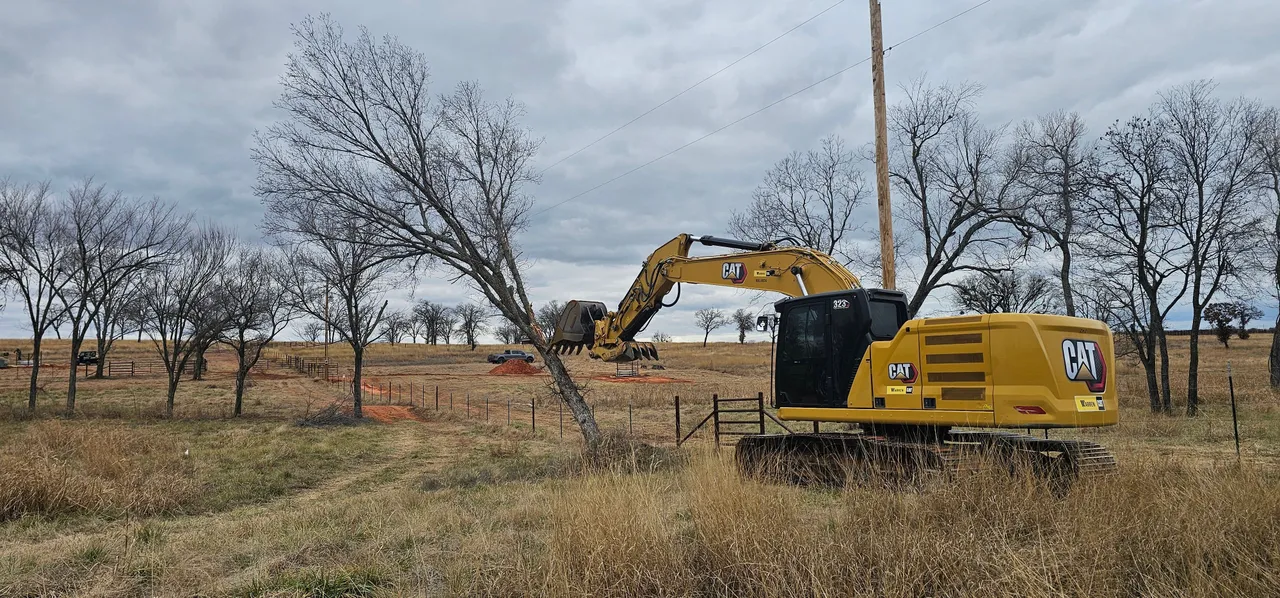
Yes, you can get help paying for eastern redcedar removal in Oklahoma, and one of the two programs that offers it closes November 1, 2026. The Oklahoma Conservation Commission’s Invasive Woody Species Cost Share pays 90 percent of a set per-acre rate for mechanical cedar control on at least 20 contiguous acres in eligible conservation districts. USDA’s NRCS funds the same kind of work through EQIP year-round. Both programs have the same rule that trips people up: clear the land before you are approved, and you can lose the money entirely.
Here is how each one works, what the numbers actually mean, and where landowners go wrong.
The Oklahoma Conservation Commission program (closes November 1)
This is the one with the deadline. For fiscal year 2027, the Commission is taking applications from September 1 through November 1, 2026, for removal of eastern redcedar, saltcedar and mesquite.
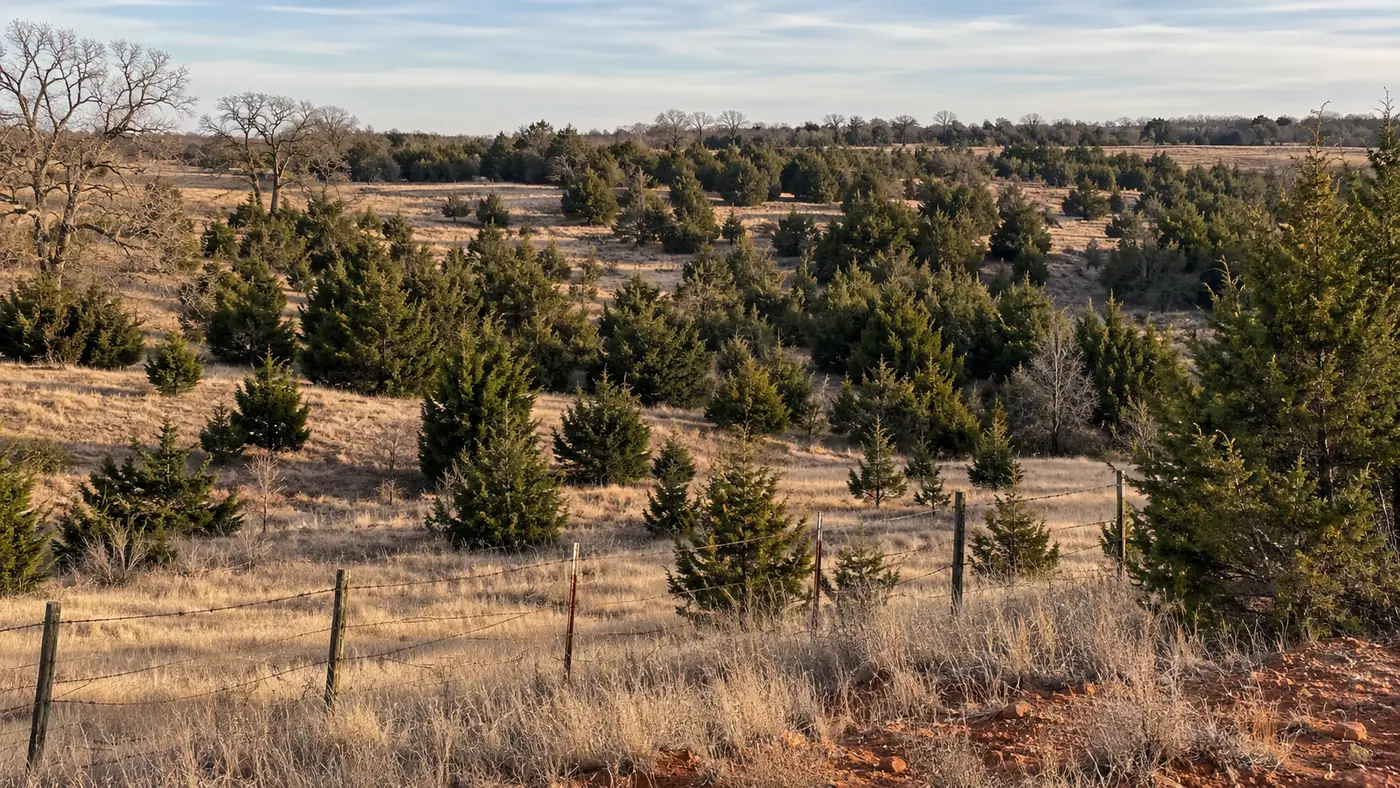
The basics, straight from the Commission’s application:
- Minimum 20 contiguous acres. Owned and leased ground can be combined to reach it.
- A yearly payment cap per landowner, stated on the application.
- A conservation district cooperator agreement is part of the application. That agreement is approved at your district’s regular board meeting, which is why waiting until the last week of October is a gamble.
- A legal description of the land, down to the quarter section, township and range. Pull it from your deed or the county assessor before you sit down to apply.
- A landowner consent form if you rent the ground.
- No double dipping. Land already under contract with another brush management cost-share program is not eligible.
The FY27 program covers 23 conservation districts: Cleveland, Coal, Creek, Dewey, Grady, Hughes, Konawa, Lincoln, Logan, Major, McClain, Noble, North Caddo, Oklahoma County, Okfuskee, Okmulgee, Payne, Pontotoc, Seminole, Shawnee, South Caddo, West Caddo and Woodward.
One thing worth knowing if you are west of the metro: Canadian County is not on this year’s list. If your cedar problem is around Yukon, Mustang or El Reno, NRCS EQIP is your route, and it is covered below. Everyone else should confirm their exact parcel against the program map on the Oklahoma Conservation Commission’s website, since district lines do not always follow county lines.
What 90 percent cost-share actually pays
This is the part most people misread. The program does not pay 90 percent of your contractor’s bill. It pays 90 percent of its own set cost per acre, and that rate depends on how thick the cedar canopy is.
For mechanical control, which the Commission defines as “mulching, bulldozer, grubber, excavator,” the FY27 rate sheet sets one per-acre rate for each of three canopy cover classes, and the program pays 90 percent of that rate:
| Canopy cover class | What happens to the payment |
|---|---|
| 11 to 30 percent | Lowest per-acre rate |
| 31 to 50 percent | Roughly 1.6 times the lowest rate |
| Over 50 percent | Nearly 3 times the lowest rate |
The exact figures are on the Commission’s FY27 rate sheet. The payment for your job is that rate times your eligible acres. If the actual clearing costs more than that, the difference is yours. The application says it plainly: “a cash or in-kind match may be required.”
Two practical takeaways. First, ask how your acres will be classified, because the canopy class moves the per-acre payment more than anything else. Second, get a real estimate for the work so you know your out-of-pocket number before you commit, not after. We do not publish clearing prices because every property is different, but a written estimate on your actual ground gives you a number to set against the program rate.
NRCS EQIP: the year-round route
The federal Environmental Quality Incentives Program, run in Oklahoma by USDA’s Natural Resources Conservation Service, funds Brush Management (practice code 314), which covers cedar removal. Unlike the state program, EQIP takes applications continuously. They are grouped and ranked on set dates, so applying sooner puts you in an earlier batch.
How it works, per NRCS Oklahoma:
- Contact your local NRCS office at the USDA Service Center for your county.
- A conservation planner visits the property and writes a conservation plan.
- Your application is ranked against others. If it is funded, you sign a contract.
- You complete the practice to the plan’s specifications.
- NRCS checks the work, then pays. EQIP payment normally comes after the practice is implemented and inspected, so plan on fronting the cost of the clearing.
EQIP payment rates are published each year in a state cost list, and the FY2027 Oklahoma list is not posted yet. Your planner will have the current numbers.
The mistake that voids it: clearing before approval
Both programs draw the same line, and it is the single most expensive mistake on this list.
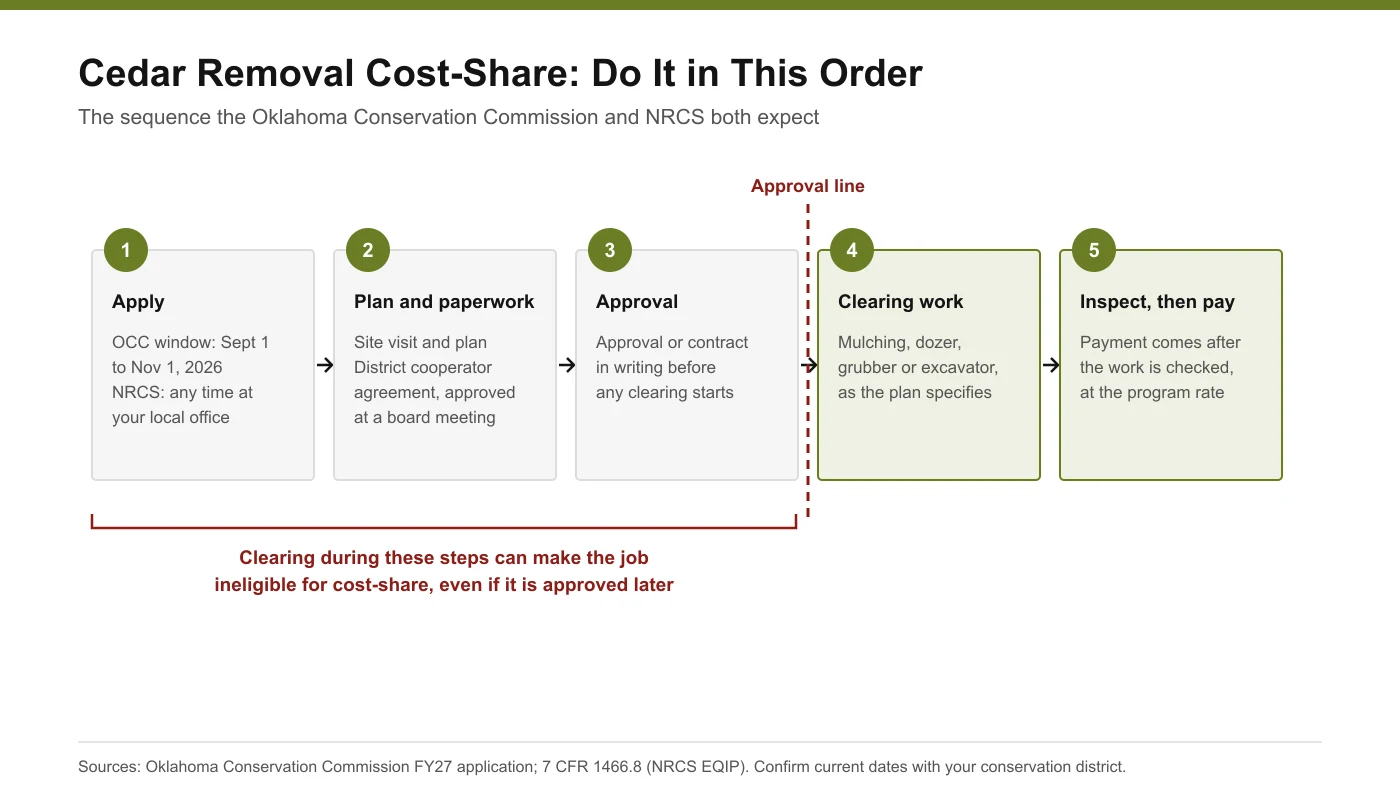
The Commission’s application warns that implementing the practice “prior to application approval may result in ineligibility of financial assistance.” Federal EQIP rules (7 CFR 1466.8) are stricter: no payment for practices started or implemented before the contract is approved, unless a waiver is granted before the work begins.
In plain terms: if you want the cost-share, do not let anyone start clearing, including you with a chainsaw, until you have approval in writing. Clearing the worst corner early because it looks urgent can cost you the payment on the whole job.
Which clearing method fits a cost-share plan
The program rates cover mulching, dozer, grubber and excavator work alike, so the right method comes down to your ground and what it has to do afterward. Your conservation plan may specify it.
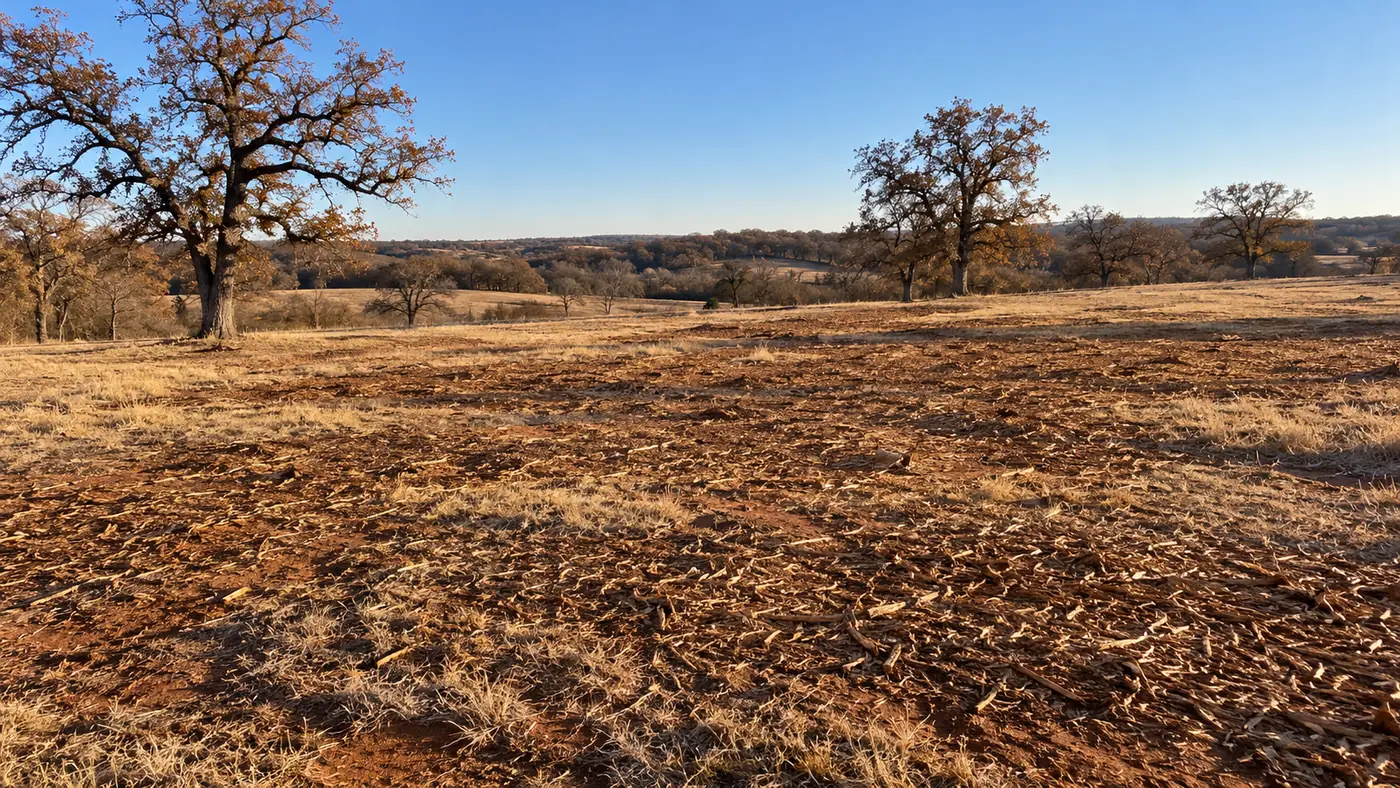
Forestry mulching is where most cedar on grazing land ends up. One machine takes the cedar down where it stands and leaves a chip layer that holds the soil, with nothing to pile or haul. A dozer or excavator with grubbing makes sense when stumps have to come out, for example on hay ground where equipment has to run. We broke down how to match the method to the ground in our pasture reclamation guide.
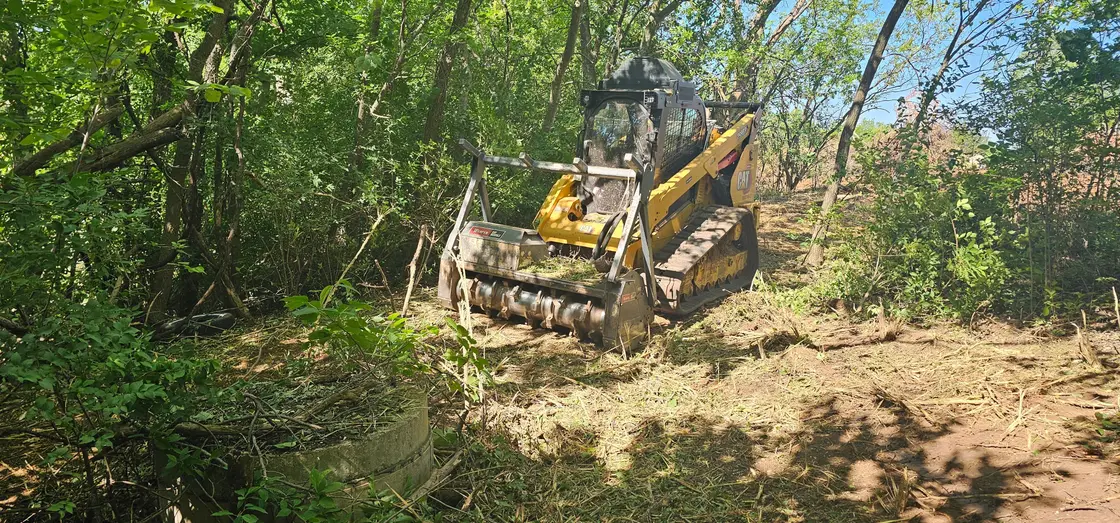
One commitment to understand before you sign: the cooperator agreement asks you to maintain the conservation practices you put in place. With cedar that means staying ahead of the seedlings that come back from seed already in the soil. A cedar cut below its lowest green limb does not resprout, but new ones will sprout, and catching them small is far cheaper than clearing again.
Where we fit in
We are a clearing contractor, not a program office. We cannot approve an application, tell you how your acres will rank, or promise that you will be funded. What we can do is walk your property, clear the cedar with the method your ground and your plan call for, and give you a free written estimate up front so you know where you stand against the program rate.
If you are inside the Commission’s program area, the clock matters: the application window closes November 1, and the cooperator agreement needs a district board meeting. Call your conservation district first. Then call us at (405) 465-2809 or request an estimate, and we will come look at the cedar with you.