
Cedar in Ground That Used to Be Open
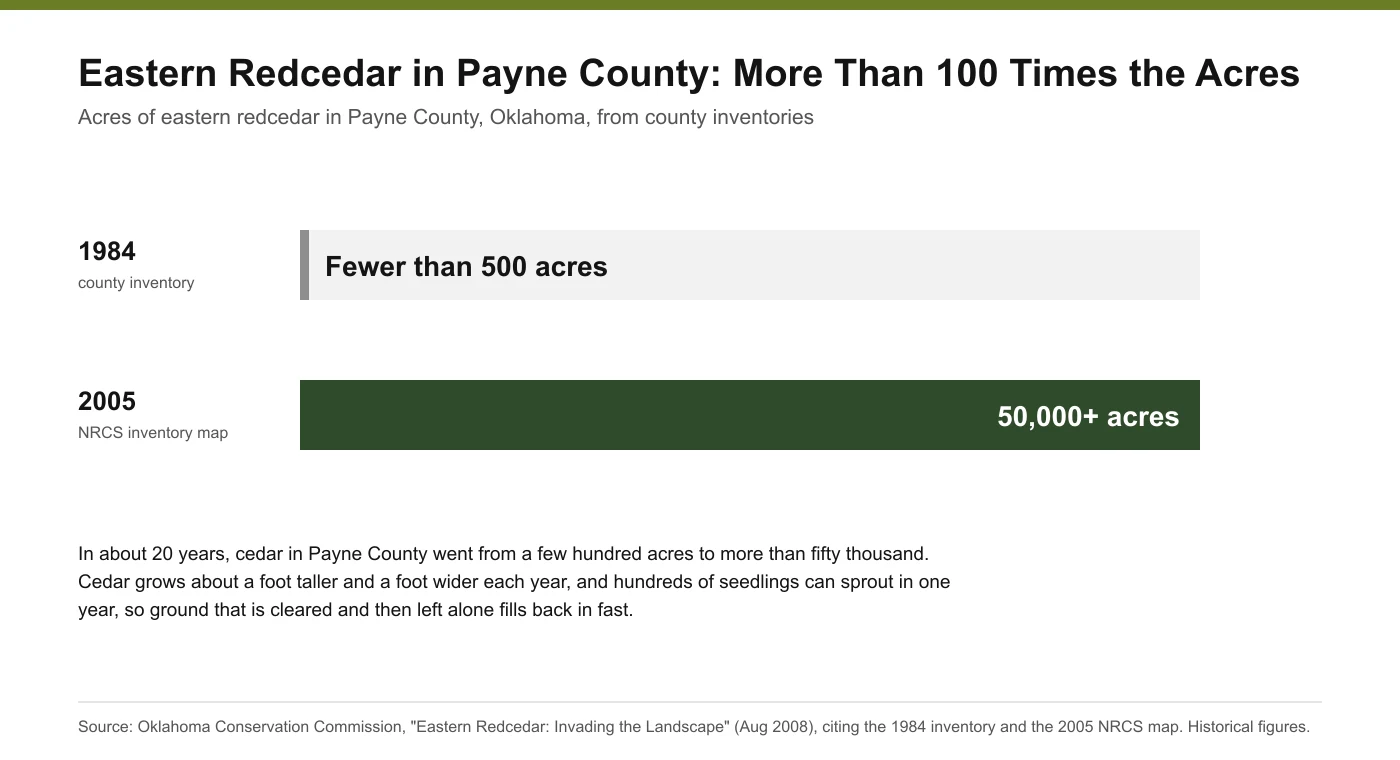
Payne County went from fewer than 500 acres of eastern redcedar in a 1984 inventory to more than 50,000 acres on a 2005 NRCS map. A lot of the work here is taking pasture and open ground back from cedar.
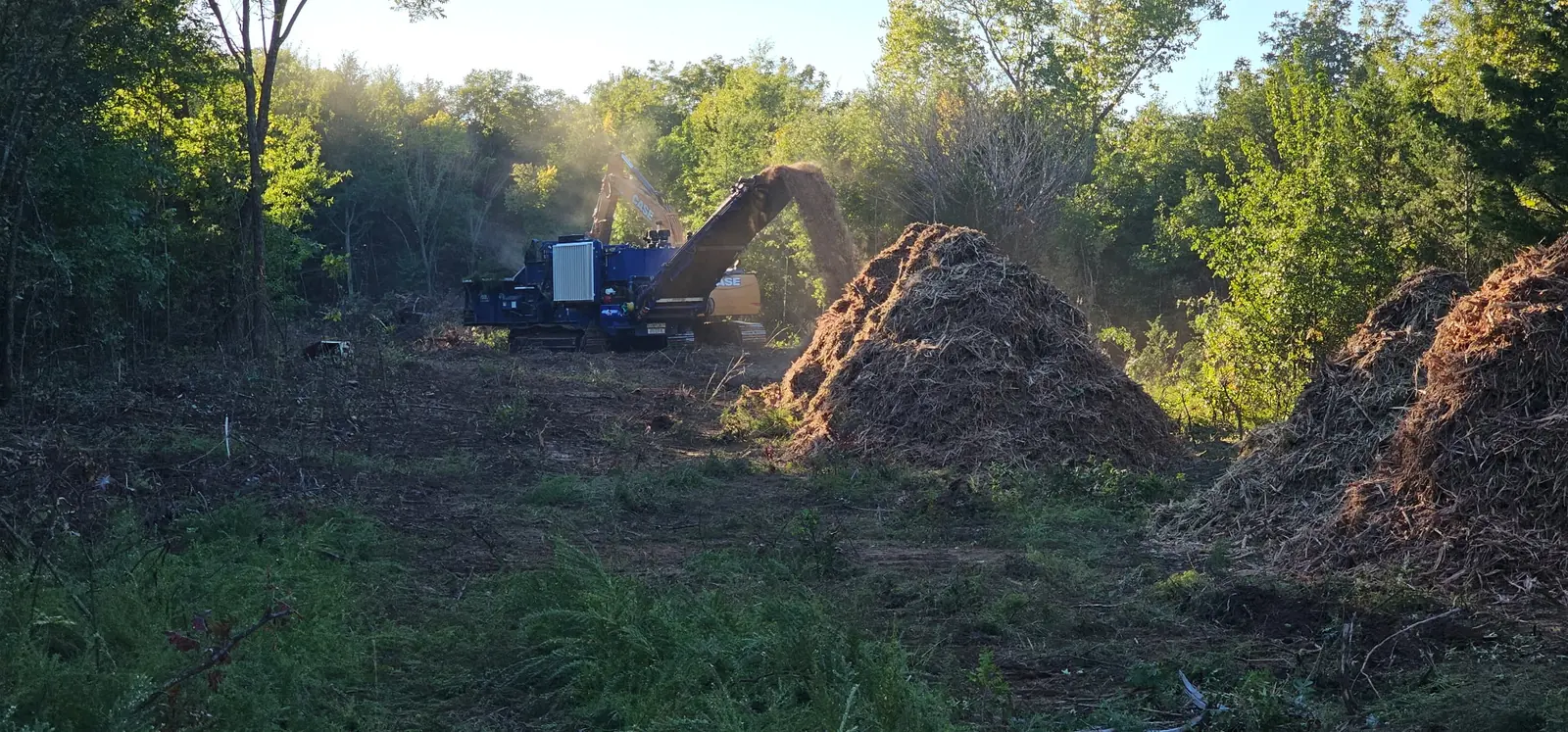
Stillwater and the rest of Payne County are inside our roughly 150-mile service area, with the same in-house crews and equipment we run across the Oklahoma City metro.
Stillwater sits in what the EPA maps as the Cross Timbers Transition ecoregion, on the edge between the post oak and blackjack woodlands of the Cross Timbers and the open prairie of the Central Great Plains. That mix is what most Payne County property looks like: a stand of oaks worth keeping, open ground that used to be pasture or hay, and eastern redcedar working into everything in between.
So most clearing here is not a clear-cut. It is taking cedar and brush back out of ground that used to be open, opening a homesite or a driveway on wooded acreage without losing the good oaks, and getting rural land usable again. We bring the same in-house crews and equipment to Stillwater that we run across the Oklahoma City metro, and we walk every property before we put a number on it.
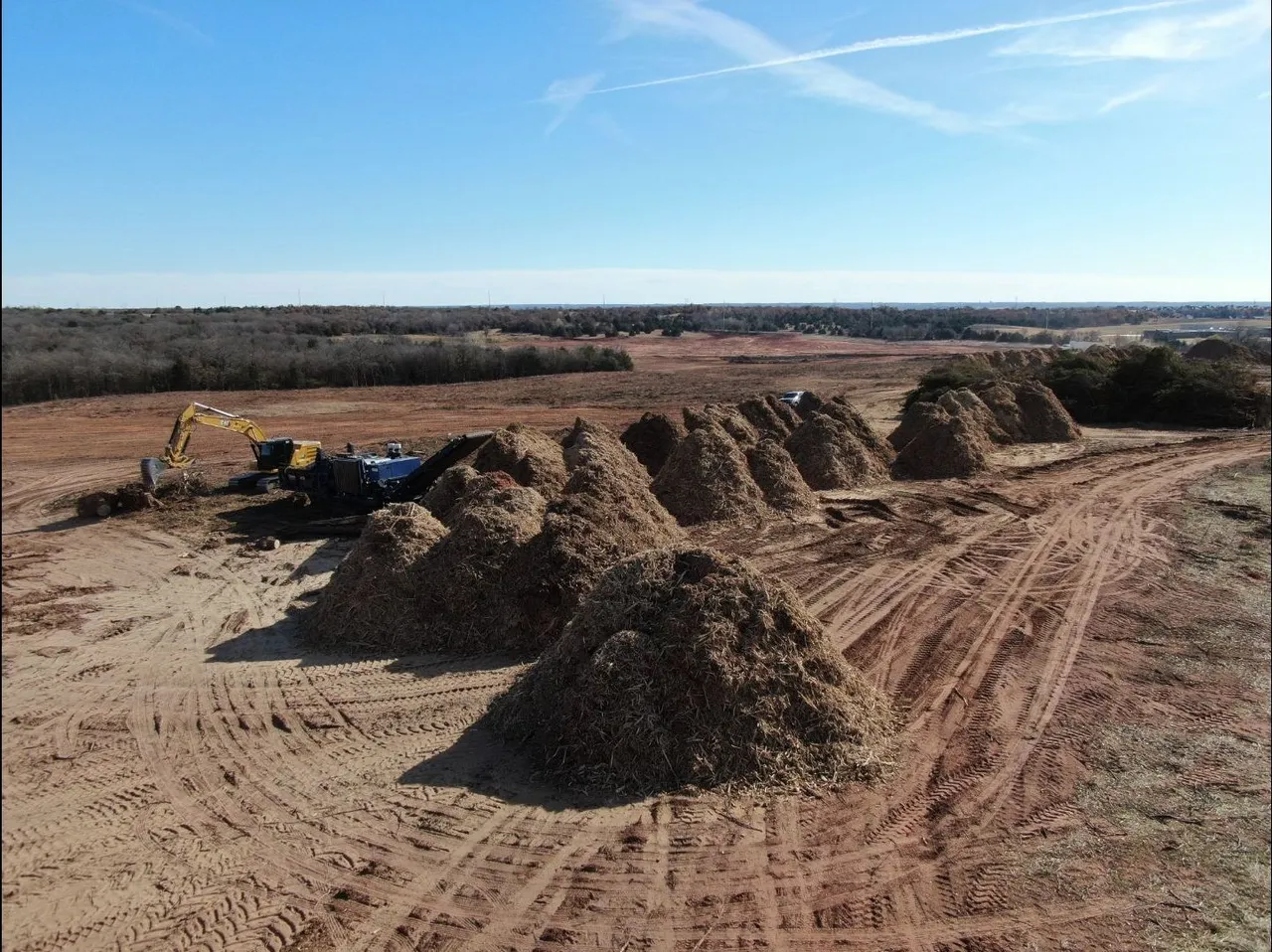
Payne County went from fewer than 500 acres of eastern redcedar in a 1984 inventory to more than 50,000 acres on a 2005 NRCS map. A lot of the work here is taking pasture and open ground back from cedar.
Post oak and blackjack take decades to grow. On wooded homesites we mark the keepers first and clear the cedar and brush around them, instead of scraping the whole lot.
Inside Stillwater, disturbing more than an acre takes a city Earth Change Permit, and burning takes a permit from the Fire Marshal. Outside city limits those city permits do not apply, but state stormwater rules still can.
Stillwater is a new area for us, so we will be straight with you: we do not have a list of Stillwater jobs to point to yet. What we bring is the same crews, the same equipment, and the same free walk-through we give every property, plus an honest answer about what your land actually needs.
The Oklahoma Conservation Commission's fact sheet Eastern Redcedar: Invading the Landscape puts it in plain numbers. Payne County's 1984 inventory showed fewer than 500 acres of redcedar. The 2005 NRCS inventory map showed more than 50,000. Those figures come from a 2008 publication, but they show how fast cedar takes open ground once it gets a start.
The same fact sheet explains why cleared ground fills back in: cedar grows about a foot taller and a foot wider each year, and hundreds of new seedlings can come up in a single year. Clearing is a reset, not a cure, which is why follow-up matters as much as the first pass. We covered that in our pasture reclamation guide.
Payne County is in the state's cedar cost-share program. The Oklahoma Conservation Commission's Invasive Woody Species Cost Share lists the Payne County Conservation District for fiscal year 2027, with applications open September 1 through November 1, 2026, and a 20-acre contiguous minimum. Mechanical control, including mulching, dozer, grubber, and excavator work, is an eligible practice. The district office is at 2600 S. Main St., Suite C, in Stillwater, 405-571-3371. We explained how the payment works, and the mistake that voids it, in our cost-share guide.
 Tap the chart to open it full size.
 Inside city limits, Stillwater requires an Earth Change Permit for earth-disturbing work that exceeds one acre. The city's stormwater management program says the permit covers all forms of development except bona fide agricultural operations, that permits are issued within 14 days of an application, and that permitted sites are inspected by city staff at least once a month.
The city permit sits alongside the state's. Disturbing an acre or more also brings in the Oklahoma DEQ's construction stormwater general permit, OKR10. Stillwater's program watches sediment closely because Boomer Creek and Boomer Lake are on the state's list of impaired waters with sediment as a target pollutant. How the ground is left after clearing matters on these sites, and forestry mulching leaves a chip layer over the soil instead of bare dirt.
If your property is near a creek, check the FEMA flood map before you plan anything. The city links it from its Flood Awareness page. For questions before a project starts, the city's Development Services office is at (405) 742-8220.
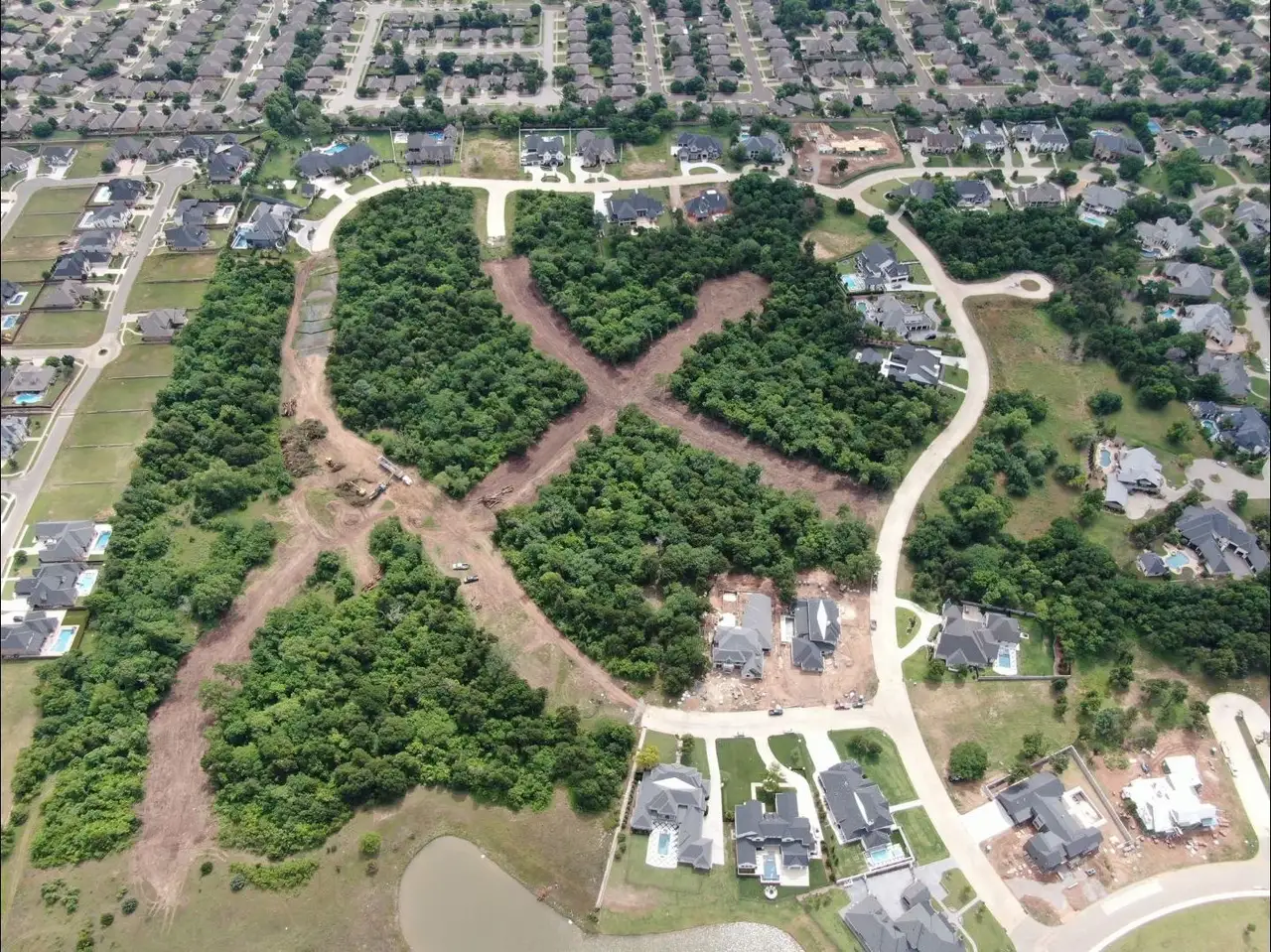
Inside Stillwater, clearing land for construction is on the list of burns that need a permit under City Ordinance No. 2699. According to the city's burn permit page, applications go to the Fire Marshal's office, (405) 742-8308, at least a week ahead, a permit fee applies, and approval is not guaranteed.
The distance rules decide what is even possible on a lot near houses. A land clearing burn within 300 feet of an occupied structure has to be in an approved pit with induced air, still at least 150 feet away, with written consent from the adjoining property owners. Burning above ground takes 500 feet or more and the office's approval, and burns run only between sunrise and sunset. Put a Payne County burn ban on top of that, and the brush piles can sit for weeks.
That is why we tell most customers what we tell ourselves: you shouldn't burn it, grind it. A grinder does not need a permit window, a setback, or a neighbor's signature. We laid out the full comparison in Don't Burn It, Grind It.
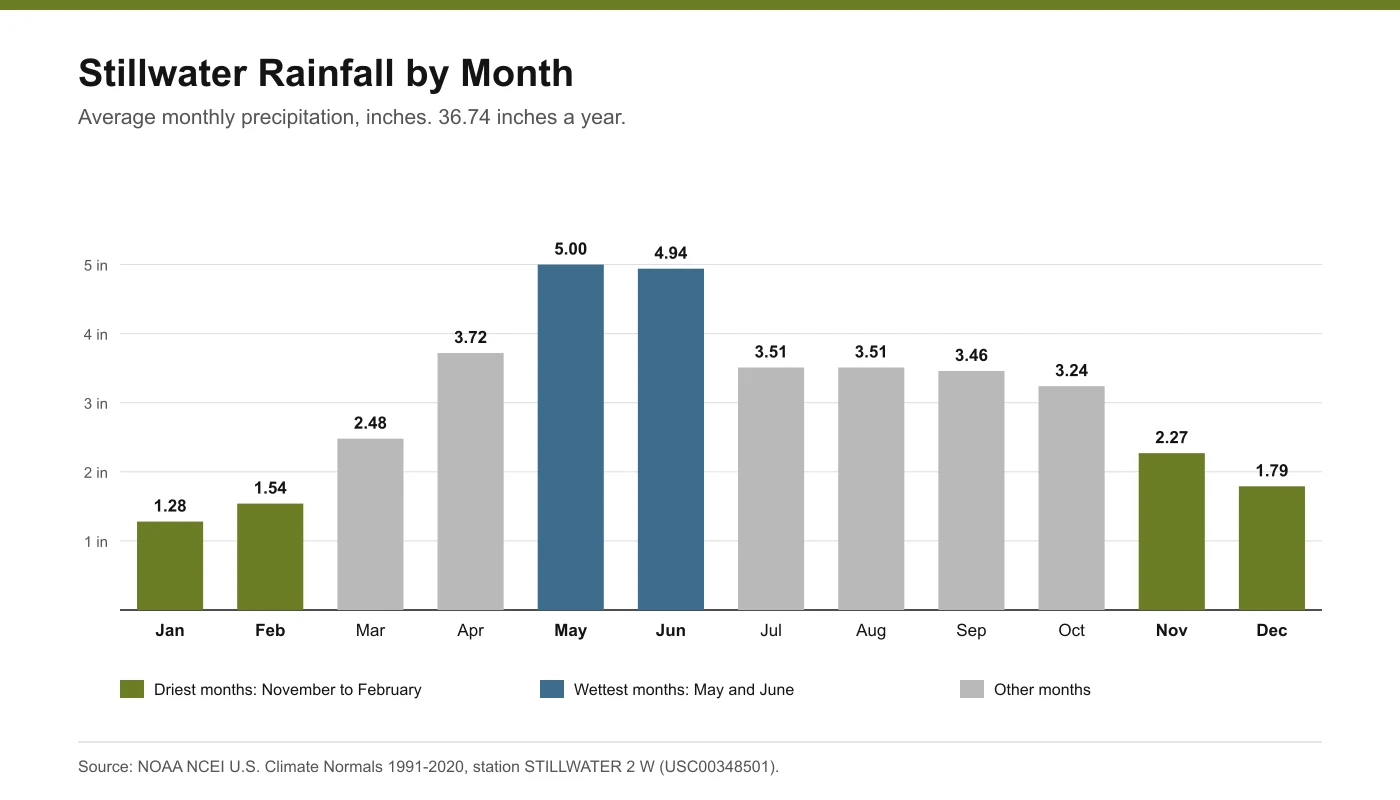
Stillwater averages 36.74 inches of precipitation a year, and it does not fall evenly. NOAA's 1991 to 2020 climate normals for the Stillwater station put May at 5.00 inches and June at 4.94, the two wettest months by a wide margin. January, at 1.28 inches, is the driest.
That pattern matches how clearing goes on the ground. November through February bring the least rain, the brush is bare so an operator can see what is being cut, and ground that is not saturated carries equipment with less rutting. Late spring is when a job is most likely to wait on the weather. Our guide to the best time to clear land in Oklahoma covers the trade-offs, including when waiting is not worth it.
 Tap the chart to open it full size.
 From residential land clearing on a single Stillwater lot to commercial land clearing and commercial site preparation on a full development tract, one owner-operated crew handles all of it, so your project does not get handed between contractors.
We come out to your Stillwater property, read the acreage, density, terrain, access, and haul-off, and give you a firm number.
We confirm what stays, what goes, and the finished grade you need, then set a start date that fits your timeline.
We bring the right equipment and work through it in one coordinated push, handling the material as we go.
We leave the site clean and graded, then walk it with you before we pull off.
We come out, walk the land with you, and price the real job on the spot. Free, and there is no obligation to book.
Trusted on job sites by construction and dozer contractors across the OKC metro.
Tell us about your property and we will get back to you, usually the same day. Prefer to talk now? Call (405) 465-2809.
Prefer to talk now?
Call (405) 465-2809