
- Brush Clearing
- Forestry Mulching
Clearing Cedar Around Your Oklahoma Home Before Fire Season
Oklahoma's worst wildfire months are January through April. Here is how far back to clear, what to clear first, and the mulch mistake that undoes the work.

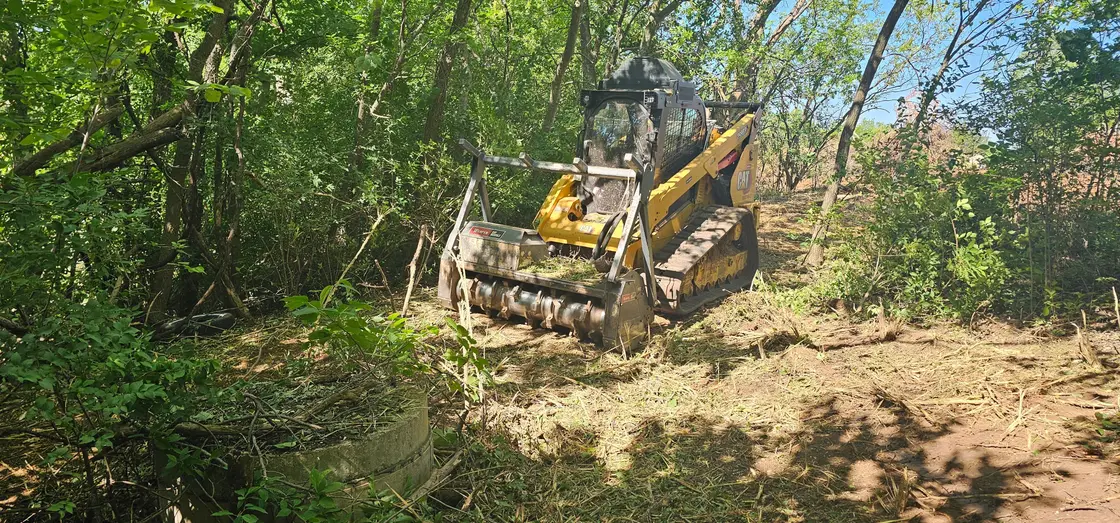
Clear eastern redcedar away from your house in the fall or early winter, before Oklahoma’s peak fire months of January through April. OSU Extension recommends at least 30 to 60 feet of open space between redcedars and the roofline, and NFPA’s Firewise guidance lays out three zones reaching 100 feet from the house. The cedar closest to the structure comes out first, and nothing combustible, including wood mulch, should sit within 5 feet of the walls.
That last point is the one that catches people, because the most common way to clear cedar leaves a layer of wood chips behind. More on that below.
Why fall is the time to do it
Wildfires can start in any month, but Oklahoma Forestry Services reports that activity is heaviest from January through April, when live fuels are dormant. In 2018, March had the most fires and April burned the most acres, more than 367,000.
Brown grass is what carries the fire. Redcedar is what turns it into a threat to your house.
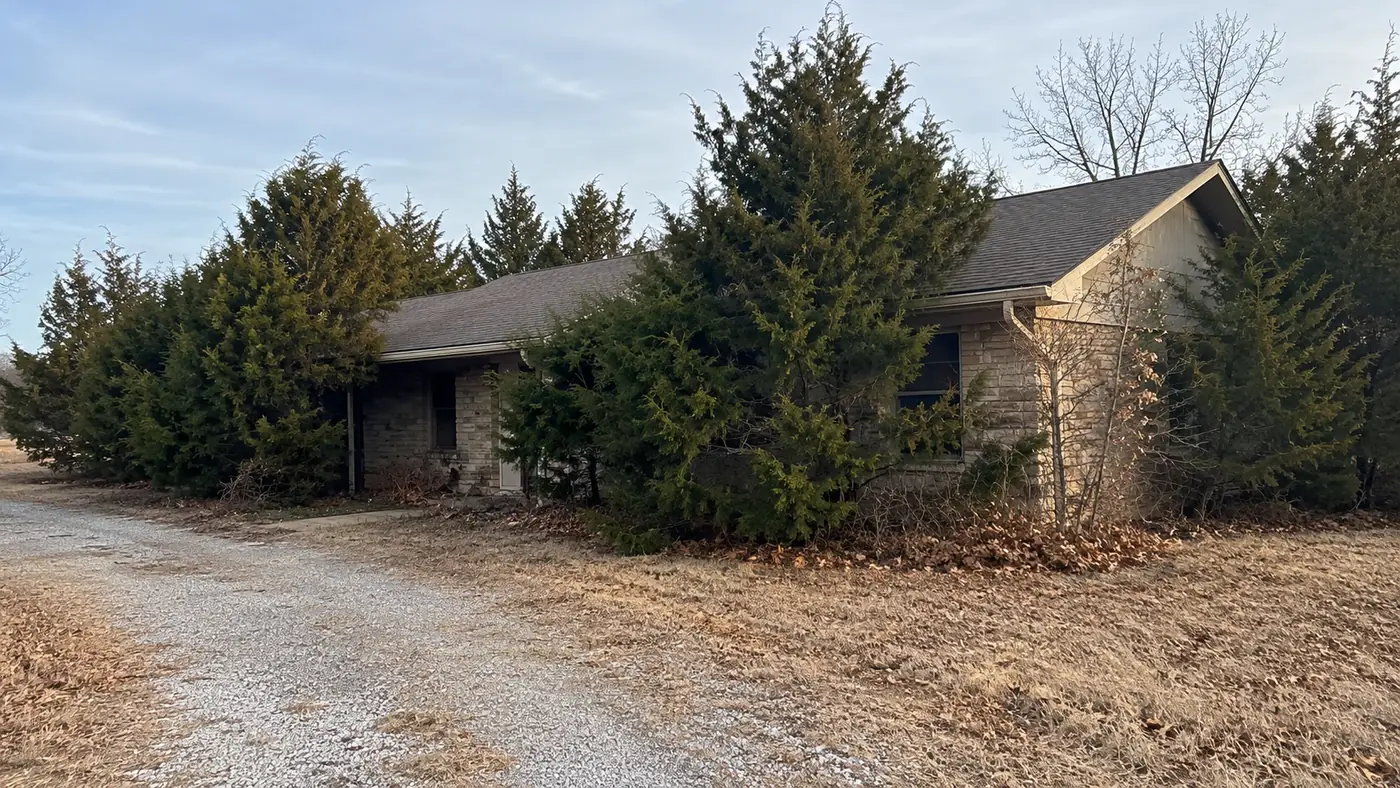
OSU Extension’s fact sheet Eastern Redcedar as a Hazardous Fuel explains why. The foliage holds volatile oils. The tree acts as a ladder fuel, carrying a ground fire up into the crown. And a burning cedar throws thousands of embers downwind. OSU’s Firewise guidance puts it in one line worth remembering: “a 10-foot redcedar has the capacity to ignite a structure at least 100 feet away.”
How far back to clear: the three zones
NFPA’s home ignition zones are the clearest way to think about it, working outward from the walls.
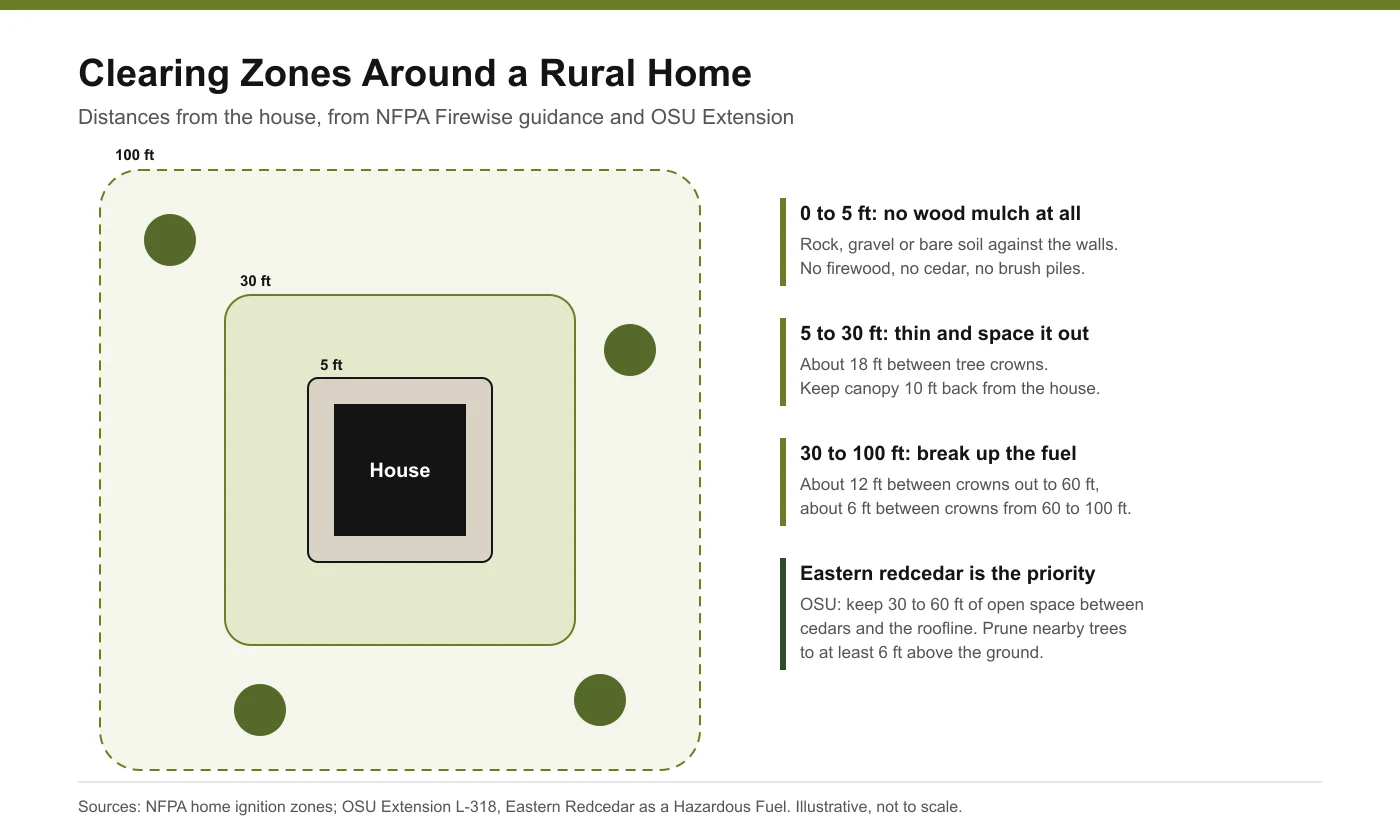
| Zone | Distance from the house | What it should look like |
|---|---|---|
| Immediate | 0 to 5 feet | Nothing combustible: no wood mulch, firewood, cedar or brush |
| Intermediate | 5 to 30 feet | About 18 feet between tree crowns, canopy kept 10 feet from the house |
| Extended | 30 to 100 feet | About 12 feet between crowns out to 60 feet, about 6 feet from 60 to 100 feet |
OSU’s recommendations line up with these and are specific to cedar: a cleared area of about 30 feet around the house, 30 to 60 feet of open space between redcedars and the roofline, and nearby trees pruned to at least 6 feet above the ground so a grass fire cannot climb into the canopy. OSU’s Firewise page goes a step further and recommends removing any redcedar near the structure, with about 100 feet of defensible space overall.
On rural acreage the 100 foot zone usually reaches into pasture or timber. That is fine. The goal is not bare ground, it is breaking up continuous fuel so a fire loses its path to the house.
What to clear first
Work from the house outward, and from the worst fuel to the least:
- Every redcedar inside 30 feet of the house. These are the trees most likely to carry fire to the walls and roof.
- Cedar thickets connecting the yard to the pasture or timber. A continuous band of cedar is a fuse.
- Ladder fuels under the trees you keep. Brush and small cedars growing under oaks let fire climb. Pruning the oaks to at least 6 feet above the ground finishes the job.
- Spacing out to 100 feet. Thin, do not clear-cut. Mature oaks spaced out with mowed grass between them are a different fire risk than a solid wall of cedar.

A cedar cut below its lowest green limb does not resprout, so this kind of clearing lasts. Seedlings will come back from seed in the soil, though, and the cheapest way to keep the space open is to pull or cut them while they are small. We covered why cedar spreads the way it does in our pasture reclamation guide.
The mulch mistake
Forestry mulching is the cleanest way to take out cedar on most acreage: one machine, no piles, and a chip layer that protects the soil. Out in the extended zone, that chip layer is fine.
Right against the house, it is not. NFPA’s guidance says to keep mulch, flammable plants and firewood out of the 0 to 5 foot zone, and fire testing by the Insurance Institute for Business and Home Safety found that burning wood mulch throws embers that light nearby mulch. The same guidance notes that building corners are more vulnerable even with 5 feet of clearance.
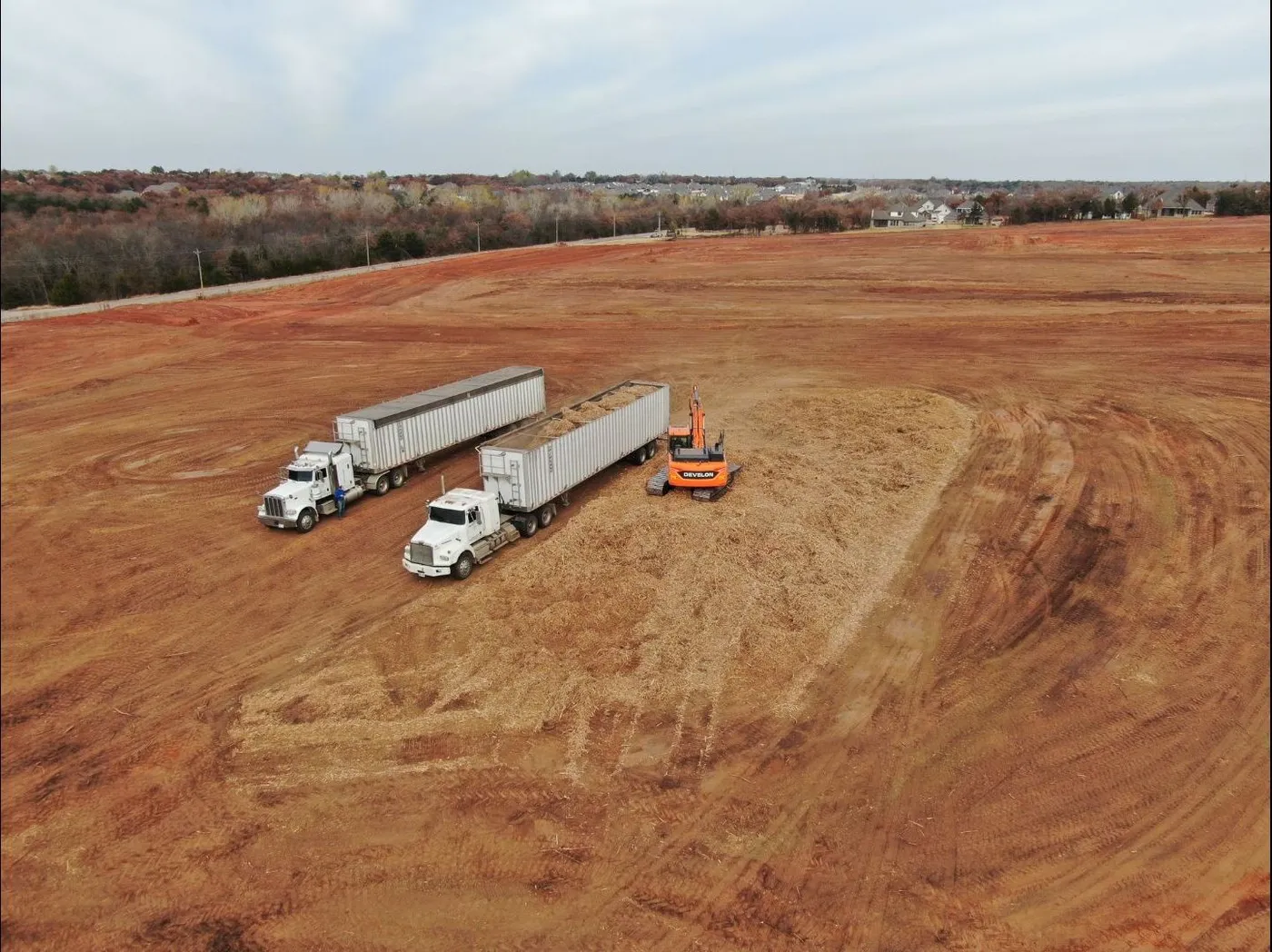
So the plan near the house is different from the plan in the pasture. Material from the inner zones gets moved away from the structure or hauled off, and the strip against the foundation ends up as rock, gravel or bare soil. Ask about that before the work starts, not after you are looking at a fresh bed of cedar chips under the eaves.
A word on brush piles
A pile of cut cedar left near the house is just fuel waiting for a dry, windy day. Whatever the clearing method, cut material should not end up stacked inside the zones you just cleared. Check Oklahoma Forestry Services for current fire danger and county burn ban status, which change often in the dry months.
Clearing cedar around homes across the OKC metro
We clear eastern redcedar and brush with forestry mulching, excavators and dozers across the Oklahoma City metro and about 150 miles around it, and we can haul material off instead of leaving chips where they do not belong. For the full range of vegetation work, see our brush clearing page.
Fall is the window, before January’s dry stretch starts. Estimates are free and done by walking the property with you. Call (405) 465-2809 or request an estimate.