
- Brush Clearing
- Forestry Mulching
Clearing Overgrown Fence Lines on Oklahoma Ranch Land
Cedar, elm and brush grown into the wire turn a fence line into a hedgerow. Here is how to clear it, and the one decision that sets the method, the time and the cost.

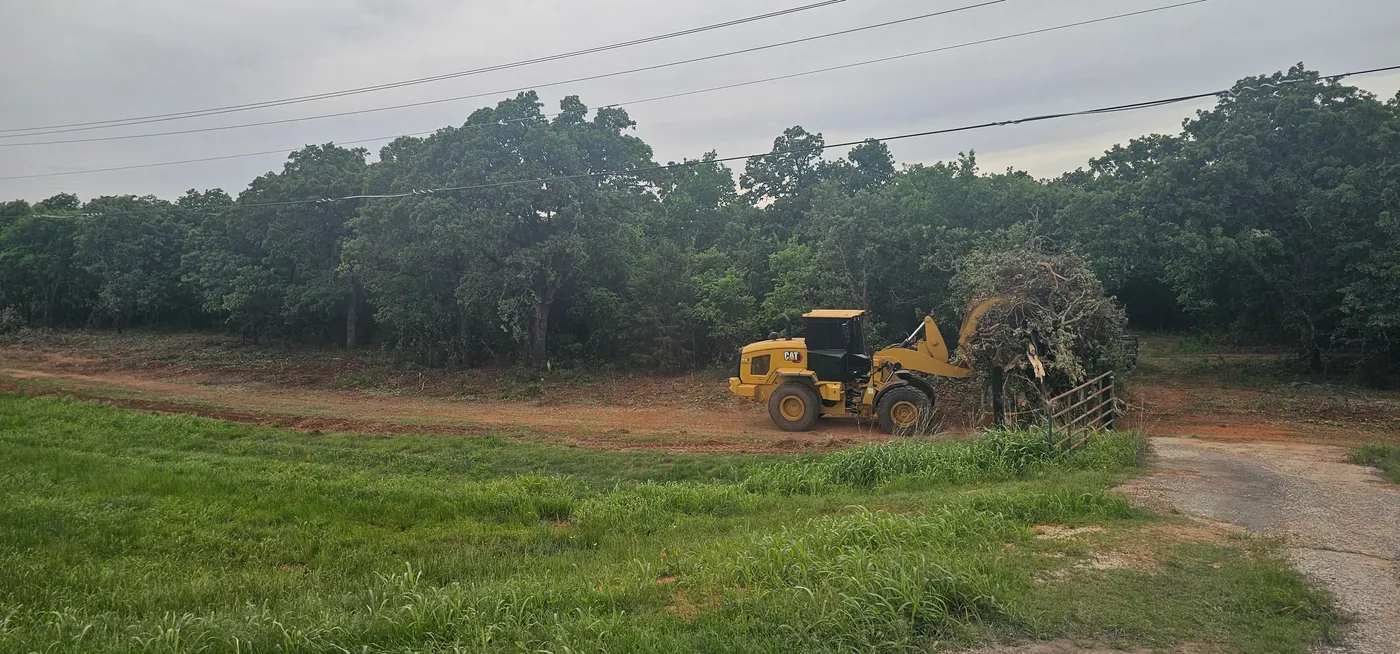
To clear an overgrown fence line, decide one thing before anything else: is the fence staying or being replaced? If it stays, the clearing is done tight to the wire from both sides, and every tree that has grown into the wire gets cut at the wire by hand. If the fence is coming out, the wire and old posts go first, and the whole line is cleared in one wide pass with the stumps grubbed where the new posts will stand.
That one decision sets the equipment, the pace and most of the cost. The rest of the job is knowing what is hiding in the line, and keeping it from growing back.
Is the fence staying or going?
Walk the fence before you call anyone. If the posts are sound and the wire is tight under the brush, the fence is worth saving and the clearing works around it. If the wire is rusted through, the posts are leaning or rotted off at the ground, and trees are holding the fence up instead of the posts, it is coming out anyway. Clearing around a fence you are about to replace is paying twice.
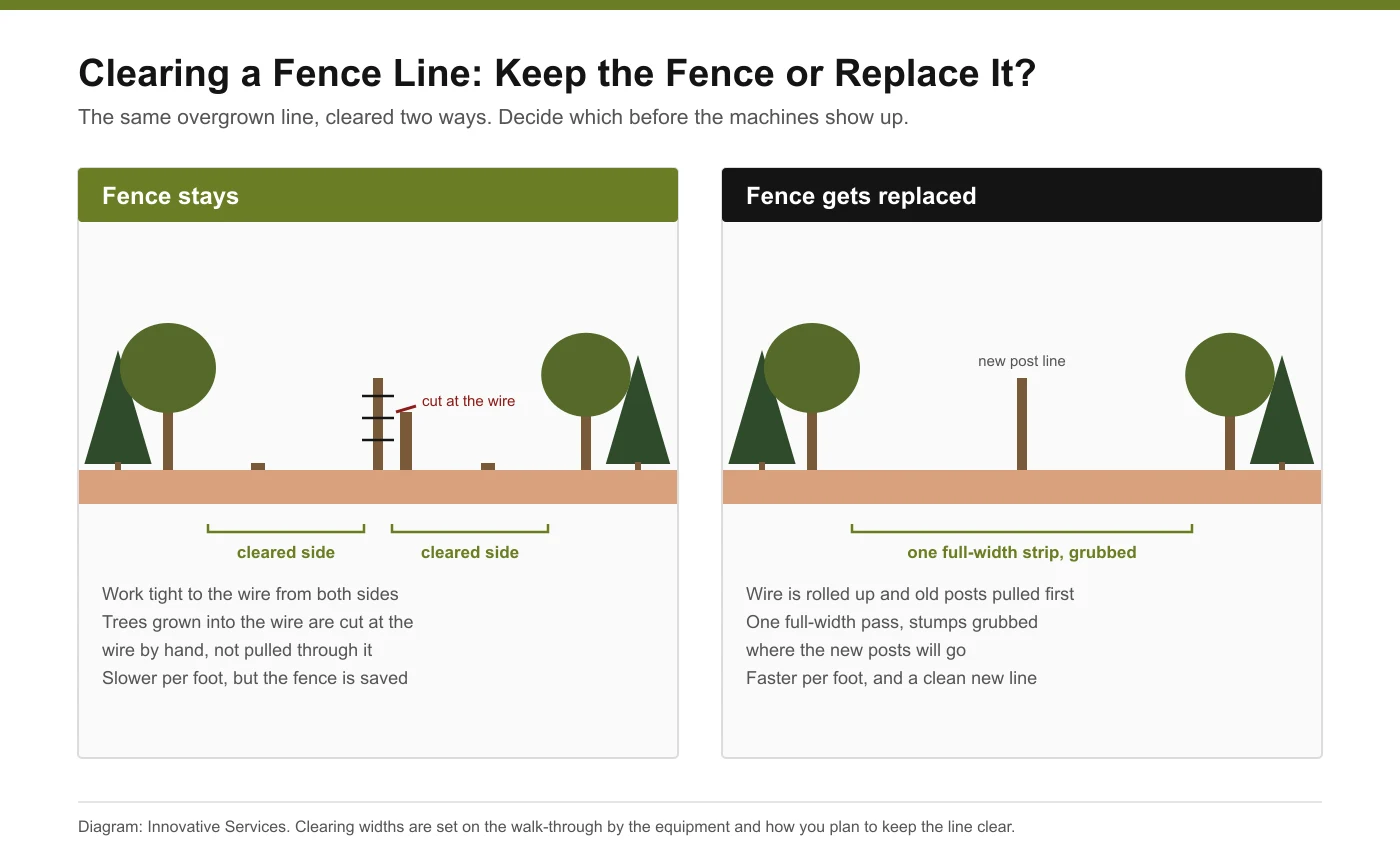
| Fence stays | Fence gets replaced | |
|---|---|---|
| First step | Walk the line and mark trees grown into the wire | Roll up the wire and pull the old posts |
| Equipment | Forestry mulcher or excavator with a grapple, worked tight to the wire | Mulcher, dozer or excavator in one full-width pass |
| Trees in the wire | Cut at the wire with a saw | Come out with the old fence |
| Stumps | Usually left low, grubbed only where they matter | Grubbed along the new post line |
| Pace | Slower per foot | Faster per foot |
| What you get | Your fence, with open ground on both sides | A clean line ready for new posts |
A common assumption is that a dozer pushed down the line is the cheap way to do it. It is only cheap when the fence is going anyway. A blade cannot work tight to wire it is supposed to save, so on a fence that stays, the work belongs to a forestry mulcher or a grapple that can reach in and lift material out without touching the posts.
If the fence is being replaced, setting the new posts and stretching the wire is fence work, a separate job. What we hand you is a cleared, grubbed line that a fence crew can build on without fighting roots at every post hole.
Why fence lines grow up before the rest of the pasture
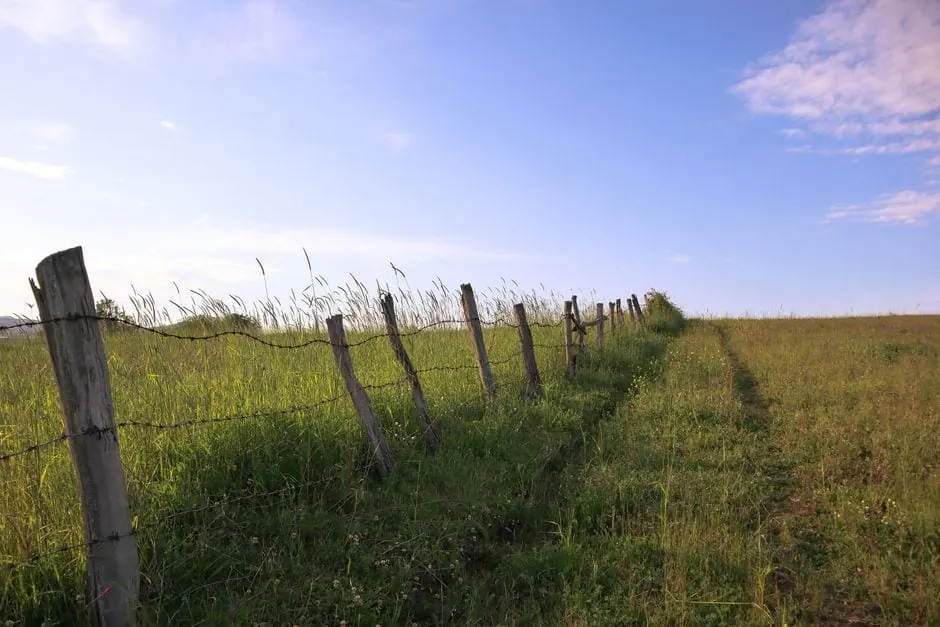
On a lot of Oklahoma pasture, the fence line is the worst part of the place. The Oklahoma Department of Wildlife Conservation explains why: songbirds spread eastern redcedar when they “perch and plant” seeds along fencerows. A strand of wire is a perch, and every bird that sits on it drops seed in a line right underneath.
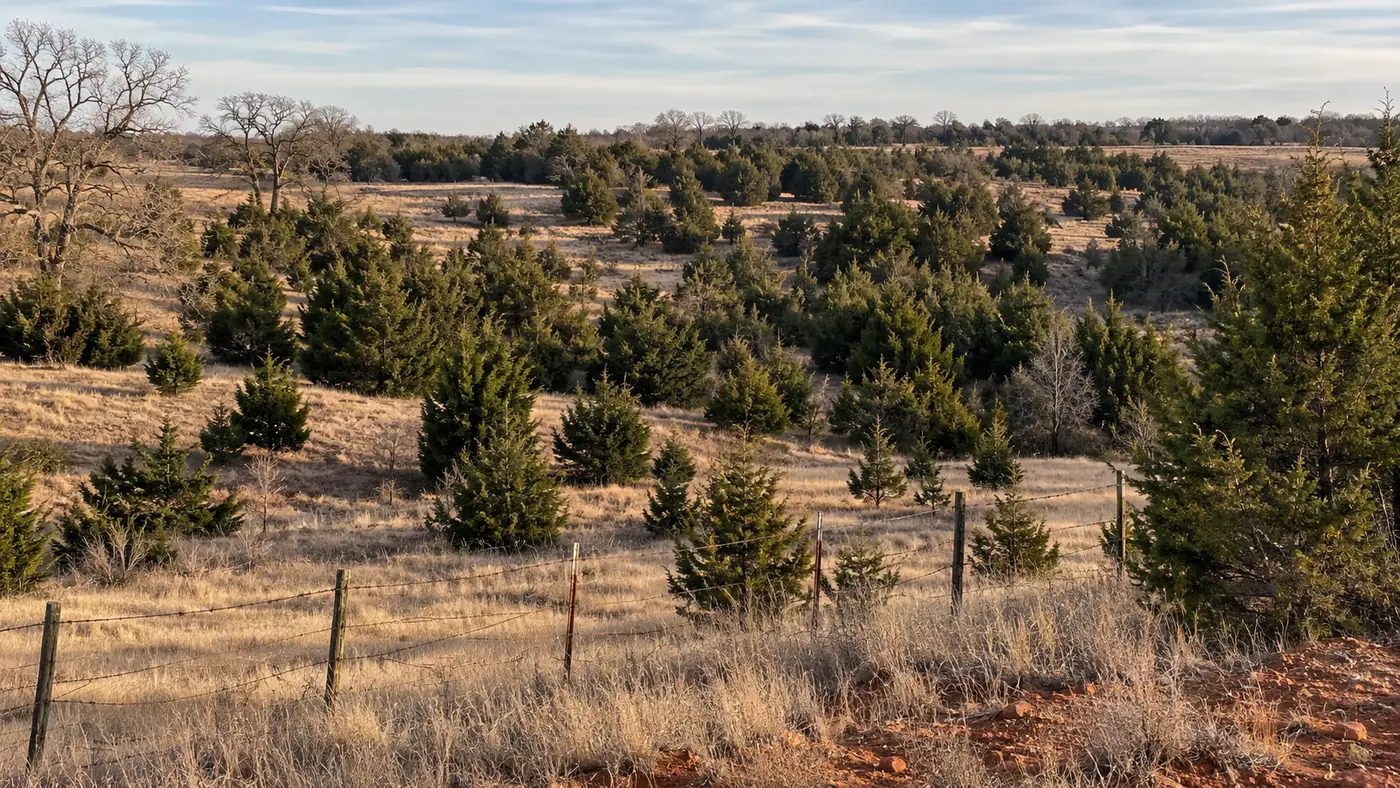
Then the line protects what lands there. A shredder cannot get under the bottom wire, and cattle do not graze tight to it. Cedar comes up first, then elm, hackberry, honey locust and whatever vines find the wire. Across central Oklahoma, old fence lines can also hold Osage orange from the days it was planted as a living fence, and that is some of the hardest wood a mulcher will ever hit.
That is also how encroachment spreads into the open pasture: a grown-up fence line becomes the seed source for the field next to it. We covered how that plays out across a whole pasture in our guide to reclaiming overgrown pasture.
What makes fence-line clearing slower than open ground
An acre of open brush and a quarter mile of fence line can take very different amounts of time, even with less material on the fence. Here is what slows it down:
- Wire inside the trees. A tree that grew up against barbed wire swallows it, and sometimes old staples with it. That wire goes through a mulcher drum or a grinder exactly once. Those trees get cut at the wire with a saw, above and below if needed, and the section holding the wire is set aside.
- Steel you cannot see. Old T-posts, a fallen strand lying in the grass, a gate half buried in brush. Loose wire wraps around a mulching drum and stops the machine. This is why we walk a fence line before the machine runs it, not after.
- The fence itself. Working tight to wire you are saving means slower passes and more hand work at the corners, braces and gates.
- Whose side it is. A fence is not always on the property line. If it is a boundary fence, the trees on the far side may belong to your neighbor, so talk to them before anything gets cleared on their side. If nobody is sure where the line is, a survey is cheaper than a dispute.
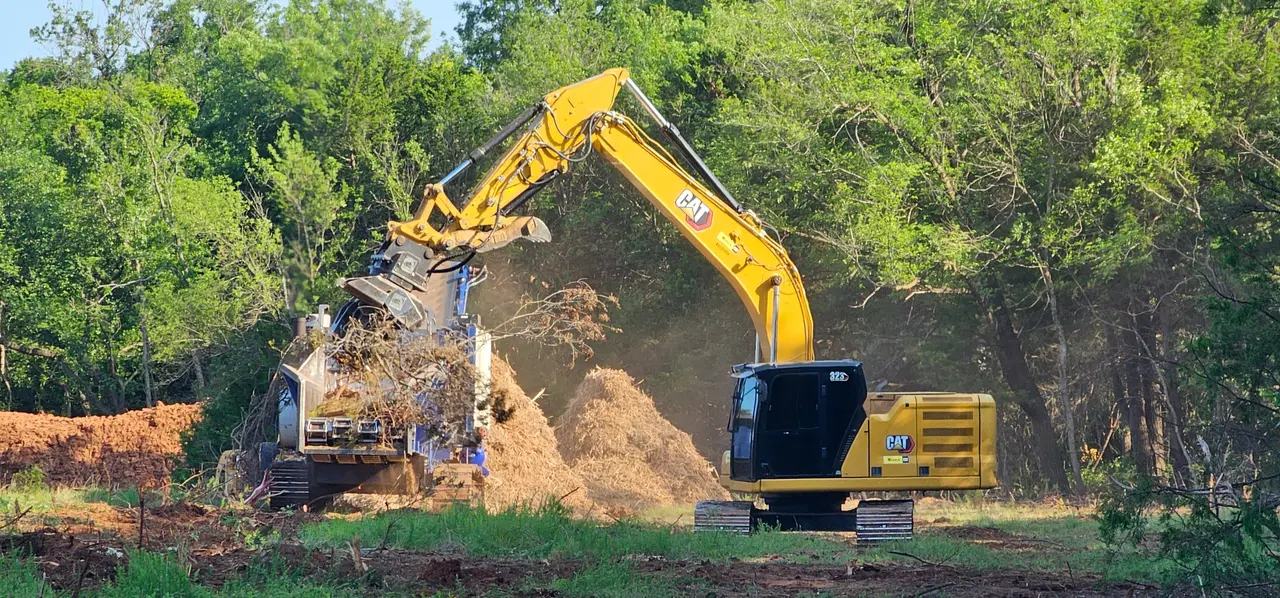
If the job includes grubbing stumps or setting new posts, both of those disturb the ground. Under Oklahoma law, anyone digging has to notify OKIE811 so utility owners can mark their lines. A locate request is valid for 14 calendar days and can be scheduled up to 10 business days ahead, so time it to the work. Buried lines on rural land often follow roads and property lines, which is exactly where fences sit.
On price, there is no flat rate per foot of fence line, and we will not pretend there is. What moves the number is the length of the line, how thick it has grown, whether the fence stays, how many trees are grown into the wire, how a machine gets to it, and whether the material is mulched in place or hauled off. That is why we price it on the walk-through.
How wide to clear, and how to keep it clear
Clear wide enough to maintain the line with whatever you will use to keep it open: a shredder, a sprayer rig, a side-by-side. A fence line cleared only as wide as the wire is a fence line you will be clearing again, because nothing can get in to keep it that way.
How it comes back depends on what grew there:
- Cedar cut below its lowest living branch does not sprout back from the stump. ODWC recommends cutting it that way, and notes the work has to be repeated as new trees come up, because the birds keep planting them along the wire.
- Elm, hackberry, locust and Osage orange sprout from the stump. Mulch them off at the ground and they come back as a thicket right in the wire. Where the line is going to be maintained, those stumps are worth grubbing out. We explained the difference in stump grinding vs. root grubbing.
After that, the cheapest maintenance is catching new cedar while it is small. A seedling along the wire takes minutes to deal with. The same tree ten years from now is another clearing job.
When to clear a fence line
Late fall through winter suits most fence lines. With the leaves off, you can see the wire, the posts and the trees grown into them, which makes the walk-through honest and the work faster. It is also usually the easiest time to move cattle off the pasture, which matters either way: a machine working tight to a saved fence can pop a strand, and a line being replaced is open until the new fence goes up. Plan where the stock will be before the work starts.
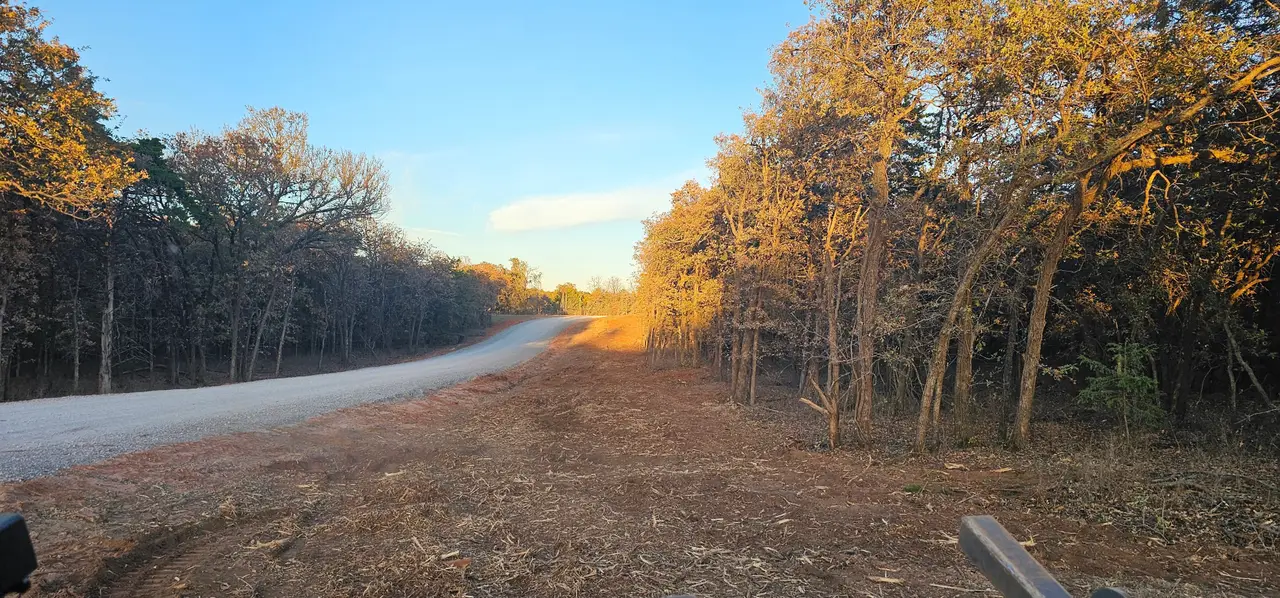
Winter ground on Oklahoma red clay is not always firm, and a wet week can still put machines on hold. We went through the tradeoffs in the best time to clear land in Oklahoma. And if stock are getting out right now, the fence line gets cleared now, whatever the season.
If your fence line runs along a utility or pipeline corridor, the rules are different again. That job is covered in right-of-way and easement clearing.
Fence line clearing around Blanchard and McClain County
We clear fence lines, pasture edges and grown-up brush with our own operators on our own equipment, from Blanchard and the rest of McClain County across the areas we serve around the Oklahoma City metro and about 150 miles out. Most of it is brush clearing and forestry mulching, with grubbing where the line needs to stay open.
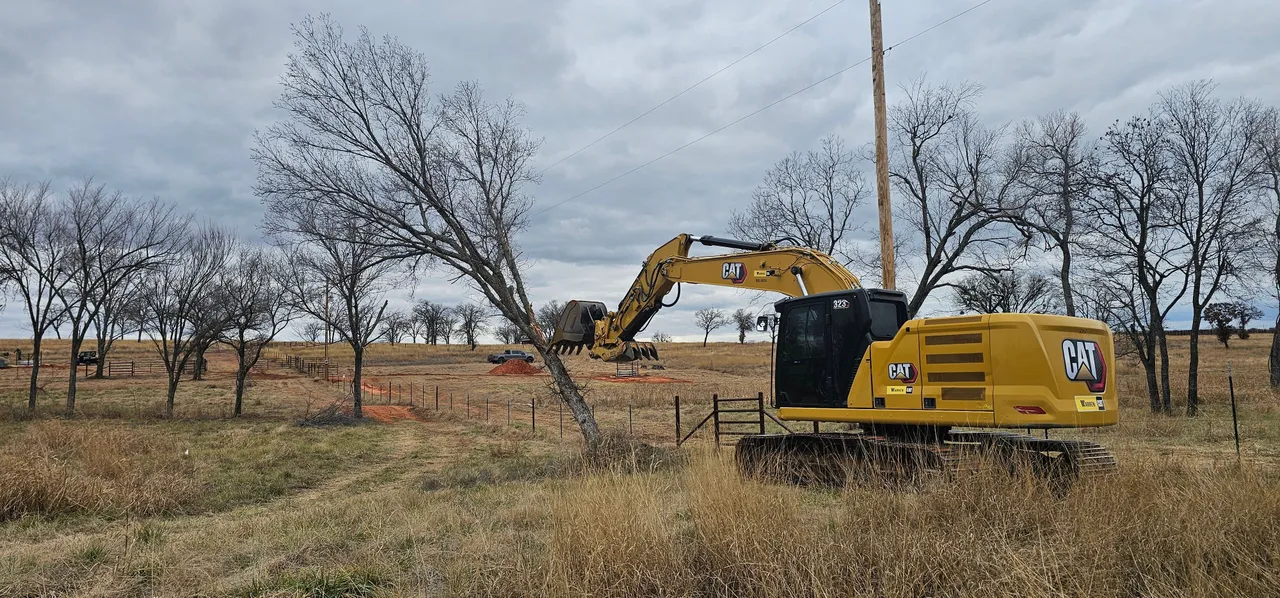
We walk the line with you, settle what stays and what goes, and give you a firm number on site. Estimates are free. Call (405) 465-2809 or request an estimate.